

ON January 8, a cloudy but fairly mild day, 26 members of Crediton Probus Club met at Downes Crediton Golf Club. Grace was given by Joe Downs after which we settled down to a really outstanding lunch served by the catering staff.
After lunch the president gave the loyal toast and asked David Sylvester to give the day’s quote. Russ then mentioned the death of Reg Nott’s wife Margaret after a long illness.
The draw was won by Eric Rodd and the speaker, one of our members, Richard Adams, was introduced by Brian Healey.
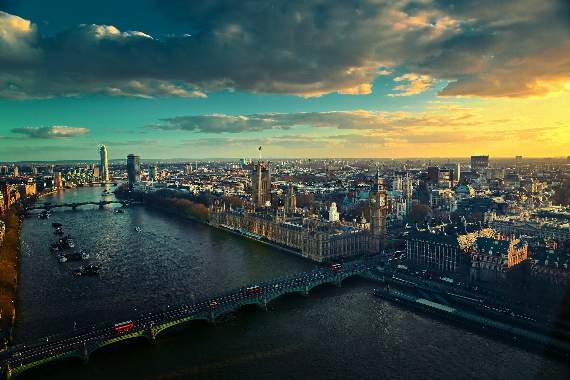
Explaining that in a former life he had been Deputy Chief Clerk of the City of London, Richard first gave a brief history of the City and told us how, over the past 30 years or so, developers have perfected techniques for building much taller buildings on London clays and the buildings of the 1950’s and 60’s began to make way for more grandiose schemes.

.jpeg?width=209&height=140&crop=209:145,smart&quality=75)


Taller buildings, especially skyscrapers, need deeper foundation for stability and have to follow the statutory requirement that any new building should not spoil the well-known view of St Paul’s Cathedral. This resulted in significant construction below ground-level.
The systematic clearing of old buildings and the far more sophisticated techniques, such as geophysics, available to archaeologists, have meant that a fund of knowledge about the location and development of Roman, Anglo-Saxon and medieval buildings has now been built up.
Indeed, much of the evidence of the Roman city has only come to light in the last 30 or 40 years and even then many discoveries have been accidental.
Richard has obviously had an interesting relationship over the years with archaeologists, who he says, as a species, seem to deal only in centuries or millennia.
When, in a project Richard co-ordinated, the Corporation decided to develop the area in front of the medieval Guildhall, he was asked for access to the site to be allowed to archaeologists to look for a medieval chapel.
After very detailed excavation over a long period they finally decided that the remains found were not very much different to those of many other chapels in the city. However, the archaeologists then asked whether they could excavate beneath the chapel.
Now the Corporation is responsible for the Museum of London, so to provide a good example to other developers, permission was granted.
Some weeks later the chief archaeologist asked Richard to accompany him to the site where he was shown (Richard says that this sort of thing only ever happened on a Friday!) well-preserved evidence of a Saxon street with individual Saxon shops.
A little while later there was another Friday afternoon knock and Richard was shown the remains of a Roman amphitheatre, covered up when the Saxon street was built.
Further excavation confirmed that this was a discovery of national importance. The plan of the new buildings was re-jigged and the newly created Guildhall Yard now has the amphitheatre marked and parts of it are displayed in the basement of the new building.
The remains were located at about the level of the proposed first basement of the new building and after lengthy discussions with the Department of the Environment an elaborate scheme was devised to insert a specially designed slab underneath the whole thing supported by a series of “sky-hooks” on a steel frame that covered the entire site.
Richard had involvement in all sorts of other projects including the redevelopment of Greenhithe Docks, the erection of the NatWest Tower, the Gherkin and the development of the Barbican Estate and the Barbican Arts Centre.
Richard concluded by saying that his work in the Guildhall was not confined to building projects but these together gave him many hours, days, weeks (and possibly years) of both frustration and fascination. His talk was illustrated by his own photographs.
Richard was thanked for his fascinating talk by Jack Fey.
The meeting ended with the usual toast “’til the next time”.
KB
Comments
This article has no comments yet. Be the first to leave a comment.