

WHEN the County Championship was first played for in 1889, it was a time when the game was going from strength-to-strength and, without meaning any disrespect to current County players, the competition was far more meaningful 100 years ago than it is today.
It was after all, the only competitive aspect of the game that produced a trophy at the end of it, although more importantly, it was the pathway to selection for England.
The England selectors tended to watch the County Championship games rather than Club games and the side would contain a list of players with their County rather than Club actually named.
Devon had its fair share of international players over the years and during the last decade of the 19th Century, Clubs such as Devonport Albion, Tiverton and Barnstaple were very much in the ascendancy.

Devonport, through their links with the Dockyard which attracted workers from all over the country, Tiverton had their links with Blundell’s School and Barnstaple possibly helped by the ferry service between Ilfracombe and South Wales.
It was therefore not only difficult to secure a place in the County side but moreover a huge achievement to do so.
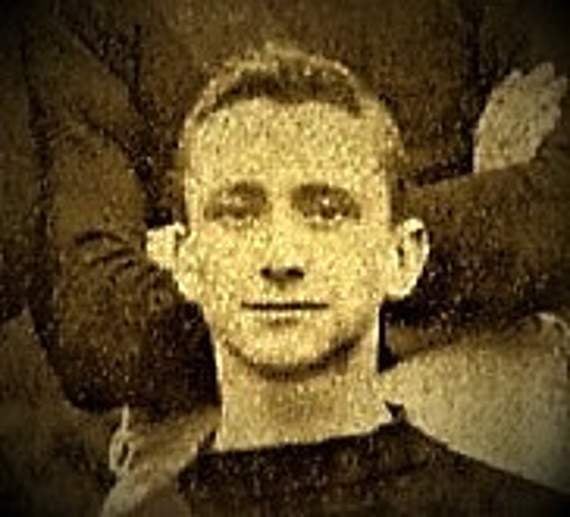
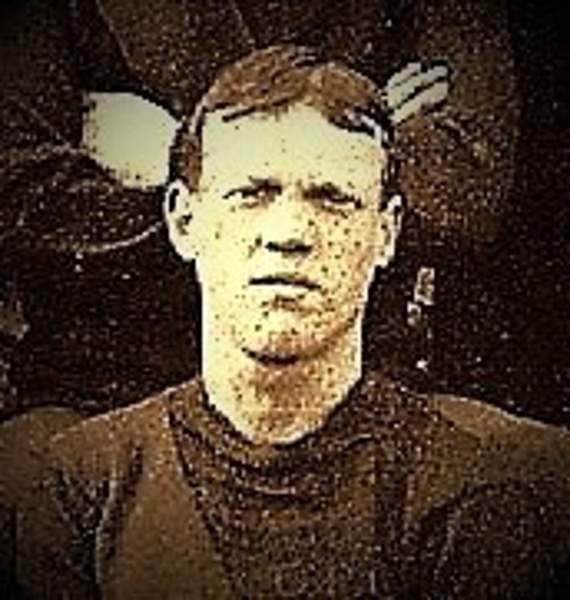
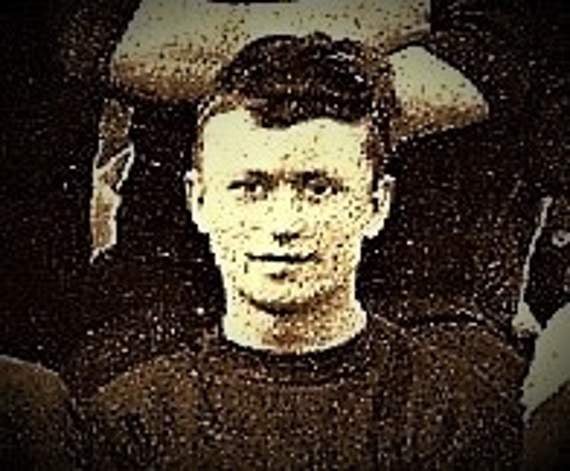
There were a number of Crediton players who managed this and, following on from last week, here are five more who made it, if only fleetingly.
THOMAS JOHN LYNE
Thomas John Lyne had been a regular in the First XV since 1886 with some outstanding performances at full-back for the Club.
Lyne was a stonemason, living in Park Street, and originated from St Ives in Cornwall.
He had been close to County selection before and appeared in a couple of trial games.
In December 1889 his chance eventually came and, although not the original selection at full-back for Devon, he was drafted into the side when Hocken of Devonport Albion withdrew.
The game against Old Blundellians at Tiverton and the one familiar face alongside him in the team was George Boddy.
A third Crediton player, Sidney G Labbett was selected but withdrew through injury. That would have made three Crediton players in the Devon side.
Devon won the game 7-4 and despite a couple of handling errors, Lyne performed well and pulled off a try saving tackle which ensured the win for the County.
Old Blundellians were no mean side, they were capable of beating some of the top sides and included a couple of England internationals and players from some of the top Club sides.
That was the only appearance that Lyne would make for Devon as Hocken resumed his place for the remainder of the season and beyond.
It was unfortunate for Thomas Lyne that his best rugby was played in an era when competition for County selection was particularly strong.
SIDNEY GEORGE LABBETT
Sidney George Labbett was a hugely skilful fly-half, the first in a long line of Labbett’s who would play rugby for Crediton.
Sid began his playing career at Crediton in 1886 where he remained until his job with an insurance company took him to Bristol in 1892.
At that time he had played two games for the County, in January 1890 against Newport (it was not uncommon for the County to play the top Welsh Club sides) and against Cornwall.
He then spent three seasons playing for Bristol Hornets before moving back to Exeter in 1895.
Living in Exeter he played for the Exeter Club and was soon in the Devon side again.
In January 1896 he appeared against Surrey at Richmond and the following season against Cornwall at Falmouth. His final season in County colours, 1897-98, was probably his best with five appearances out of the eight games played, of course his appearances always had (Exeter) after his name!
His work took him to Manchester where he remained, until returning to Crediton, where he took over the running of his father’s coffee shop in the town.
He served on the Crediton Rugby Club Committee for many years until his death in 1937. In total, Sid played 10 games for Devon with a record of five wins, one draw and four defeats.
Arthur Ernest Churcher was born in Wickham, Hants to a "well-to-do" family, his father was a Land Agent.
They moved to Crediton, living at Taw Vale Terrace, in part to ensure that Arthur had a good education at the Grammar School, which had a fine reputation.
Churcher learned his rugby at the Grammar School and then played for the Club from 1887, becoming Club Captain in the 1890-91 season, by which time, at the age of 20, he had become an Auctioneer and Surveyor.
Churcher and Sid Labbett more or less grew up together in rugby terms as they made a formidable half-back pairing for the Grammar School and of course played together for the Club although Churcher had switched to centre.
Churcher made two appearances for Devon in the 1890-91 season which would be his last season playing for both Club and County.
His life beyond rugby, however, was far more exceptional.
He joined the British Army in 1890 and fought in the Second Boer War, serving in the Imperial Yeomanry, where he was wounded and returned to England in April 1902.
Churcher joined the Royal West African Frontier Force as a Captain and later transferred to the political department.
Still in Nigeria at the start of the First World War, Churcher led a small police force to collect information about the German troop movements in neighbouring Cameroon.
The small force repelled an attack by the Germans but he was wounded and returned to England. Churcher served in France until the end of the war, followed by some time in Ireland before he retired in 1920.
It could be imagined that maybe those experiences would be enough to last for a lifetime but Churcher was elected to Windsor Town Council in 1924 and in 1935 became Mayor of Windsor.
During 1937, on the day of the coronation of George VI, Churcher was knighted as the King and Queen made a state entry into Windsor. So plain Arthur Churcher ended life in 1951 as Lieutenant Colonel Sir Arthur Ernest Churcher.
WILLIAM HARVEY
William Harvey was another strong forward who suffered due to the strength of competition around the County.
He came through two trial games in November 1890, the second he was in the "Possibles" who would generally figure in the list of reserve players when selection was made for the first County game.
However, Harvey outshone his opposite number, an already established County player, and his general all-round accomplished performance earned him the right to be the selectors choice for the opening game against Midland Counties.
That game was lost 3-13 and despite being favourably mentioned a couple of times in the match reports at the time, the selectors made wholesale changes for the next game and William Harvey was one of the casualties.
William E Spreadbury was born at Wembworthy where his father was a gardener. They moved to take over the Yeo Vale Hotel at Lapford where his father was the landlord and William, at the age of 13, was listed as a coal merchant.
His First team debut came in 1887 and he remained a regular First XV player and in 1892 was elected Club Captain and again in 1894.
This was another traumatic period for the Club as results were disappointing and it was on the brink of folding. However, perseverance paid off although not without additional disappointments, one of them being Spreadbury’s decision to go and play for Exeter.
However, it was in 1890 and whilst a Crediton player, that he made his County debut in a Boxing Day game against Neath.
He would then have to wait until 1892 to be recalled to the County side and he played against Yorkshire away in York and Cornwall at Redruth.
His fourth and final appearance for the County was away at Glamorgan in 1895. Sadly, Spreadbury never enjoyed success in a Devon shirt as all four games were lost.
Comments
This article has no comments yet. Be the first to leave a comment.