

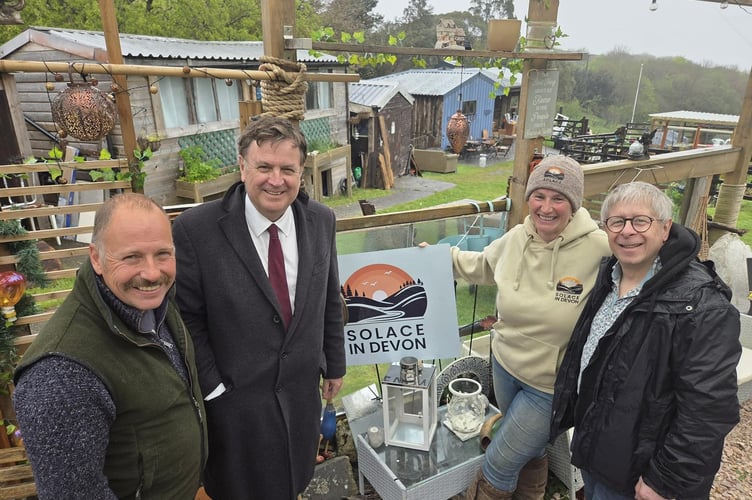
LAST week I had the pleasure of visiting Solace near Okehampton, a remarkable project nestled in our beautiful countryside that is making a real difference to local families through nature and community connection.
Meeting with Jo and Matt, who run this inspiring initiative, gave me the opportunity to see firsthand how they are helping people reconnect with the natural world and each other.
Solace in Devon offers a sanctuary for individuals and families who feel overwhelmed by the pressures of modern life.
Through a range of outdoor activities including bushcraft skills, den building, cooking outside, exploring Dartmoor, and engaging with animals, the project creates a space where people can rest, recharge and build meaningful relationships.



The work being done here goes far beyond simple outdoor recreation. It addresses something fundamental to our wellbeing that many of us are struggling with.
The national picture makes this work all the more vital. Recent data shows that over 20% of adults aged 16 to 64 now have a common mental health condition, up significantly from 18% in 2007.
Perhaps more concerning is that young adults aged 16 to 24 have seen rates climb from 17.5% to 26% over the same period.
Meanwhile, approximately 3.9 million people in Great Britain report feeling lonely often or always, with young adults between 16 and 29 now representing the most acutely lonely demographic.
What struck me most during my visit was seeing the tangible impact that nature based programmes can deliver. The evidence base supporting this approach is growing stronger.
Research into similar initiatives across the country has found that participants experience significant improvements in wellbeing, reduced stress and anxiety, and a renewed sense of purpose. One major study found that for every pound invested in nature based wellbeing programmes, there is additional benefit worth up to £7 in terms of reduced costs to the NHS through fewer GP visits and reduced medication use.
The therapeutic benefits of connecting with nature are well documented. Spending time in natural settings reduces stress hormones, improves mood through the release of serotonin and endorphins, and provides opportunities for physical activity that many of us are otherwise missing.
When combined with the community element that Solace in Devon provides, where people build friendships and support networks, the impact multiplies.
What makes projects like this particularly valuable is their ability to reach people who might not engage with traditional health services or who are waiting for NHS support.
With referrals to adult mental health services up 35% compared to pre pandemic levels, and many people facing waits of over 18 weeks for treatment, community based initiatives offer an accessible alternative or complement to clinical interventions.
Jo and Matt deserve enormous credit for the dedication they bring to this work every day.
Their warm welcome and obvious passion for supporting families in Central Devon embodies the kind of grassroots community spirit that makes our area so special. Watching them interact with visitors and explain their vision for the future of Solace in Devon, I left feeling optimistic about the positive change that can happen when committed individuals step forward to address real needs in our community.
If you or someone you know might benefit from what Solace in Devon offers, I would encourage you to explore what they provide.
Projects like this remind us that sometimes the most effective solutions to modern challenges are found not in buildings or budgets, but in the simple act of coming together in nature.
Mel Stride
MP for Central Devon
Comments
This article has no comments yet. Be the first to leave a comment.