

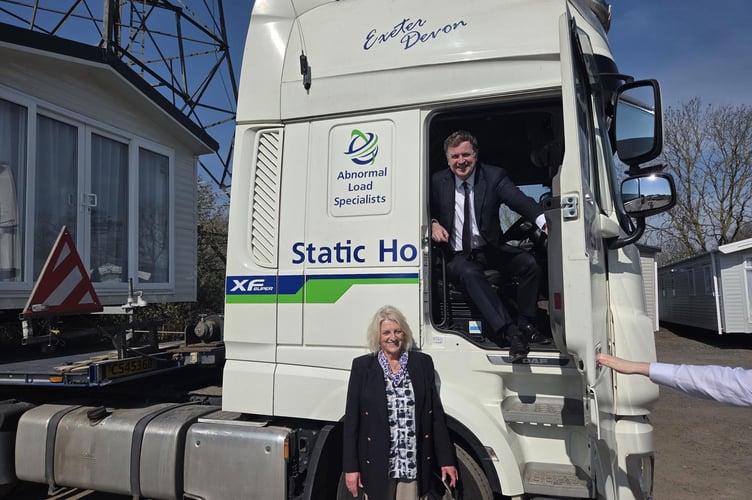
RECENTLY I met with representatives from constituency-based Devon business Static Homes UK and the Road Haulage Association to hear directly about the challenges facing the haulage sector and wider local businesses.
The conversation centred around infrastructure, rising costs and the growing pressure on recruitment and skills.
These are issues that affect not just the haulage industry but almost every part of the economy, especially in rural areas like ours.
Transport and logistics remain the backbone of the country’s economy, moving goods between farms, factories and high streets. Nationally, the road haulage industry supports around 2.6 million jobs and accounts for nearly 10 per cent of all UK employment linked to logistics.




Yet the sector is grappling with fuel costs, driver shortages and ageing infrastructure. Drivers and business owners tell me that maintenance delays on local roads, increasing insurance costs and the difficulty of attracting younger workers are all putting strain on their operations.
The shortage of qualified drivers is particularly concerning. Across the UK, industry figures suggest that the haulage sector still faces more than 40,000 vacancies.
In Devon, where the average age of drivers is rising, companies are working hard to recruit and train fresh talent.
Apprenticeships and local training schemes can make a significant difference, helping people gain valuable qualifications while addressing a longstanding skills gap.
I have always believed that practical skills and strong local employment opportunities go hand in hand.
There are also serious cost pressures. Fuel prices have surged recently and they remain one of the largest expenses for haulage firms.
For small operators, even small rises in diesel costs can erode already tight margins.
Businesses in our area are increasingly looking at efficiency improvements, digital tracking systems and cleaner vehicle technologies to keep pace with change.
These steps can help make logistics more sustainable while supporting rural economies.
Infrastructure investment is another major concern. The quality of our roads and connectivity affects every business that relies on timely deliveries.
Many in the industry highlighted the need for consistent funding to maintain road surfaces, improve junctions and support better access to industrial sites.
As I travel around Central Devon, I continue to meet firms that are deeply committed to their workforce and to serving local communities despite the headwinds they face.
Listening to these experiences is vital.
It helps me to reflect the realities on the ground and hold decision-makers accountable for policies that affect jobs and local business health.
I will keep raising these issues in Westminster and continue meeting with our business community to ensure their voices are heard.
Facebook: Mel Stride MP X: @MelJStride Instagram: @melstridemp Website:www.melstridemp.com
Comments
This article has no comments yet. Be the first to leave a comment.