

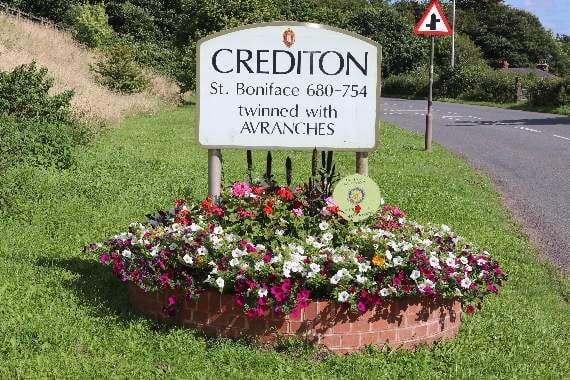
BEFORE I start with the September news from Crediton Probus Club I have to apologise for an error in last month’s piece where I referred to the nickname of 307 Polish squadron RAF as the Night Owls when it should have been the Eagle Owls... sorry to Micheal Parrot et al.
So, we had a good turnout on September 3, which caused a good buzz.
We made good use of time allowing Keith Beetlestone to announce new initiatives, which means we will now field a regular bowls team together with a quiz team.
Additionally, it is proposed to start Boys Days out which will be interspersed with our monthly meetings, with the first outing to the Norman Lockyer Observatory near Sidmouth towards the end of October. Looking forward to that.



Lunch over, our speaker was introduced, being one James Clark, who would talk to us about Bells …that’s the type which allegedly gave Quasimodo so much trouble!
A fascinating talk ensued when James told us that the current “shape” of a bell, used ecclesiastically, became established during the medieval period and cast in a version of bronze known as Bell-metal... an alloy of either pewter or tin with copper and obviously a good material, as several hundreds of bells from that period still cry out from Devon churches.
Their initial use being to regulate time for the locals within earshot of monasteries, abbeys, churches and cathedrals but after the Reformation became in secular usage until about 1850.
Initially, casting was carried out in foundries throughout the land until it became an itinerant trade, no doubt due to the transportation difficulties of moving an object weighing several tons, well they can, from the foundry.
Now the bell founder would load his pack horse with tools and paraphernalia of his trade, travel to the church requiring a new bell, dig a casting pit and a furnace, somewhat uphill, in order that gravity could work its magic with the molten bell-metal.
Until machine skimming had been invented to achieve the correct tone tuning the new bell entailed chipping metal away from the interior surface.
Now that an old cracked bell can be successfully repaired at half the cost of casting new, it has resulted in there being only two foundries in the UK and three in Holland, all static now that lorries have been invented!
Many were the questions asked of James, such was the interest in his talk, and a vote of thanks was proposed by Brian Threlfall.
On this satisfying note the meeting closed... until the next time.
Malcolm Davies
Comments
This article has no comments yet. Be the first to leave a comment.