

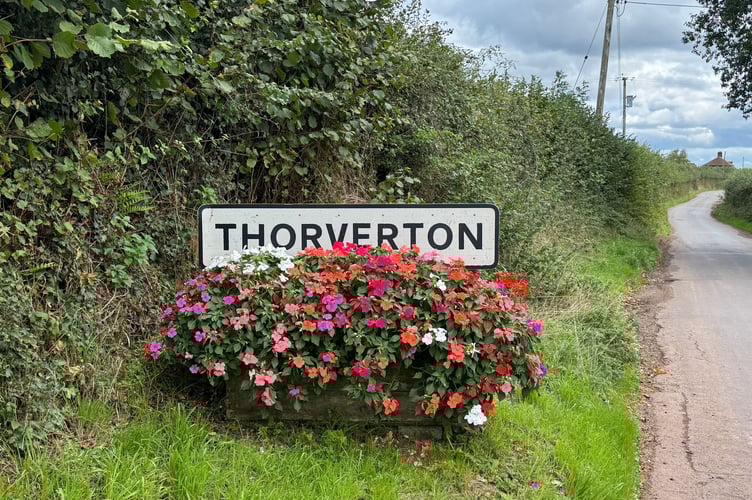
THE Escape of King Charles II featuring personal enmity, treachery and lust was the title of a talk presented by Stan Dolan to members of Thorverton and District History Society on the evening of March 27.
Stan is the Chair of Charmouth History Society and came to explain to us the events or otherwise surrounding the recorded events, accounts and evidence which may lead us to the possible fact or fiction of the days between Wednesday, September 17 and Sunday, September 21, 1651, when, after his defeat at the Battle of Worcester, King Charles II hid in Dorset, before his escape to France.
The story goes that the future Charles II stayed at the home of Colonel Francis Wyndham at Trent, near Sherbourne. He is accompanied by a Lord Wilmot.
During this time, Wyndham arranges for a boat from Lyme Regis to take Charles to France and on the Monday Charles and his party set out from Trent to meet a merchant who directs them to Charmouth.




They wait at an inn for a ship to come from France. However, the ship does not come and it is decided that Lord Wilmot and his companion should go to Lyme to discover what has happened while the others go to Bridport to wait for news.
The party, Francis Wyndham, Juliana Coningsby and Charles arrive in Bridport to find it full of Cromwell's soldiers.
Charles fearlessly pushes through and after dining at an inn, the future king leaves Bridport in the direction of London.
Lord Wilmot follows and the party diverts, down Lee Lane, to Broadwindsor where they stay the night before returning to Trent.
The “History of the Rebellion” by Edward Hyde, 1st Earl of Clarendon and former advisor to Charles I and Charles II, for example is his account of the Wars of the Three Kingdoms ( England, Scotland and Ireland) originally published between 1702 and 1704 as “The History of the Rebellion and Civil Wars in England”, it was the first detailed account from a key player in the events.
Another source more highly rated by modern historians is Boscobel, or, “The History of His Sacred Majesties most miraculous preservation”.
A 1660 book by Thomas Blount, it chronicles King Charles II’s escape from Parliamentary forces following the 1651 Battle of Worcester, and was published to mark his restoration to the throne, although Boscobel chronicles King Charles II’s escape from Parliamentary forces the book is historically significant as a crucial piece of royal propaganda, celebrating the King's survival against Oliver Cromwell's forces.
Stan pointed out both accounts feature much elaboration and from the piecing together of information after the event! More plausible are actual eye witness accounts recorded by a William Ellesdon…a merchant and later Mayor of Lyme Regis.
Anne Wyndham the wife of Francis from Trent Manor, another loyal merchant one Gregory Alford and the future king himself, recorded by Samuel Pepys.
The talk provided many quotes and the methodical piecing together of context and sources for an interesting moment in time much celebrated and researched in Charmouth!
K A Marshall
Comments
We've recently changed our login process. If you have an account for commenting, you will need to re-register on the login window.
This article has no comments yet. Be the first to leave a comment.