

HE was a humble postman whose poems, written while walking the rural lanes of North Devon on his daily round in the mid-19th century, won plaudits from the Prime Minister and the support of the biggest literary names of the day.
He was to become known nationally as the Postman Poet and was referred to as “the Devonian Burns”.
Yet today, two years short of the 200th anniversary of Edward Capern’s birth, few of his fellow Devonians are likely to have heard of his remarkable story, let alone people from further afield.
But that could be about to change. Recognition could again come knocking for Capern (1819-1894), thanks to collaboration between Bideford author Liz Shakespeare and folk musicians and songwriters Nick Wyke and Becki Driscoll, also from Bideford – the town where Tiverton-born Capern resided for most of his life.




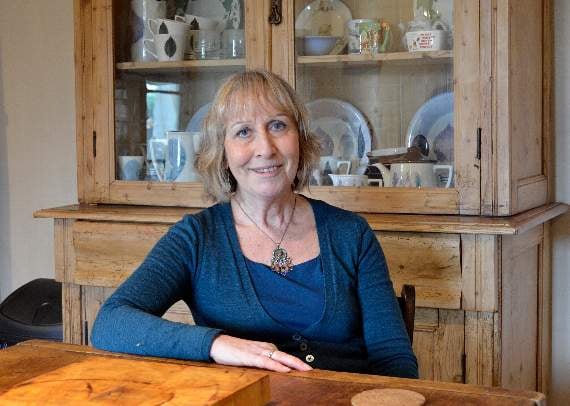
Liz has written “The Postman Poet”, a lovely novel based on the life of Capern, and at the same time is publishing 34 of his 600 poems in “The Poems of Edward Capern”.
During her research, Liz found that some of his poems were intended to be sung and Nick and Becki have spent the past 12 months choosing which ones to set to music for their CD, “The Songs of Edward Capern”.
Capern was from a poor family and as a boy only went to school for four months. He was entirely self-taught but he had a local benefactor, William Frederick Rock from Barnstaple, who saw his early poems in a local newspaper and was behind the publication of Capern’s first volume of poems.
Its subscribers included the Prime Minister Lord Palmerston, Lord Tennyson and Charles Dickens. He was also admired by Poet Laureate, Alfred Austen.
“It was a remarkable achievement for a working-class man to become nationally known and I think he deserves a larger audience today,” said Liz.
While writing the novel, Liz drew on historical research and details in the poems to tell the extraordinary story through Edward’s eyes as he struggles to support his family, a story that captures the opportunities and inequalities of Victorian North Devon.
ASKED TO KEEP ENVELOPES
Capern would jot down poems while he was walking and he often wrote on the envelopes he was about to deliver: “He had to ask the recipients if he could keep the envelopes because he’d written poems on them,” said Liz, whose own cottage in Littleham just outside Bideford was on Capern’s round.
It was during his daily two-hour break on the Bideford to Buckland Brewer route that most of his poems were written.
It seems that one day he was invited into a cottage to sit in the warmth of the kitchen while the women of the house went about their daily chores. It was an invitation he was to accept every day after that.
While carrying out her research, Liz discovered that, quite by coincidence, the cottage is now owned by a good friend, local historian and genealogist Janet Few: “When you’re in the kitchen you can imagine Edward sitting there writing up a poem about the nature he’d seen and the people he’d met that morning,” said Liz.
Liz researched the local and national events that affected his life, including the self-education movement, the coming of the railway, the mass emigration from North Devon to America and Canada and the development of the Penny Post. She read books on 19th century millinery so that she could understand the work that Jane, Capern’s wife, did. Most important, perhaps, were the poems themselves.
Close study of his four books of poems gave a fascinating insight into the mind of their author, and into the North Devon countryside through which he walked.
WRITTEN WHILE WALKING
When it came to Nick and Becki setting Capern’s work to music, they found that the poems had a particular rhythm to them: “You could tell he’d written them while walking,” said Nick, “because there is a walking feel to the rhythm of the lines. It’s pretty obvious that folk was his genre and we think he’d be happy with what we’ve done.”
Although he was careful not to upset the aristocracy who bought his work, Capern was keen to use his pen to champion the cause of the poor.
One poem Nick and Becki have set to music is “The Dinner Bell”, a tale of the haves and have-nots where Capern laments the plight of families who could hear the sound of distant dinner bells but had no food themselves.
In recognition of Capern’s commitment to social justice, £1 from each copy of the poetry collection sold is being donated to the Northern Devon Food Bank.
Capern died in 1894, aged 75, and is buried in the churchyard at Heanton near Braunton, with his trusty postman’s handbell fixed in a niche in the headstone.
So how will 21st century readers view Capern’s poems? Liz admits some are rather sentimental for today’s tastes but added: “The best of them are as fresh and honest now as they were then. The poems I’ve selected are those which best reflect his life and the locality. He loved his job, despite the weather and the long hours and it’s this love that really comes across in his work. His poems are written from the heart.”
The books and CD can also be ordered now from the websites: www.englishfiddle.com and www.lizshakespeare.co.uk. The books are also available in bookshops, including Crediton Community Bookshop.
“The Postman Poet” by Liz Shakespeare, RRP £9.99 (ISBN: 9780951687949); “The Poems of Edward Capern”, selected by Liz Shakespeare, RRP £7.99 (ISBN: 9780951687956); “The Songs of Edward Capern” by Nick Wyke and Becki Driscoll, RRP £10.
Alan Quick
The Rural Postman (an extract):
O, the postman’s is as happy a life
As any one’s, I trow; ?Wand’ring away where dragon-flies play,
And brooks sing soft and slow; ?And watching the lark as he soars on high,
To carol in yonder cloud, ?"He sings in his labour, and why not I?"
The postman sings aloud.
And many a brace of humble rhymes
His pleasant soul hath made,
Of birds, and flowers, and happy times,
In sunshine and in shade.
Comments
This article has no comments yet. Be the first to leave a comment.