
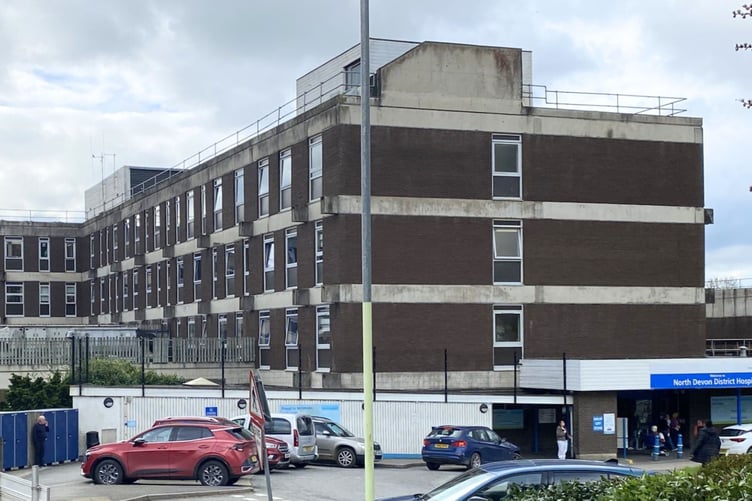
A REOPENING date for birthing services at North Devon District Hospital (NDDH) has not been confirmed but the situation is being reviewed every two weeks, a health chief has told North Devon councillors.
An initial restart date of September 29 was cancelled after two new locums left the hospital to take up other positions.
Birthing services were closed on August 11 because of a shortage of doctors, resulting in long journeys to alternative hospitals for pregnant women and their families.
The Royal Devon University Healthcare Trust says it is committed to reopening the Ladywell Unit at the most remote acute mainland hospital in England but needs to have a “sustainable rota” to make the facility safe.
Speaking at a North Devon Council meeting chief executive of the trust Sam Higginson said 127 people had given birth at the Royal Devon and Exeter Hospital (RD&E), Taunton Hospital and locations of their choice since the closure.
“To date we are not aware of any significant clinical incidents that have occurred,” he said.
A new locum is due to join NDDH on October 12 and the trust is “in conversations” with others.
“We are reviewing the situation every two weeks because we are conscious we will need two weeks to restart a service as we need to tell patients and the public and other services,” he said.
Mr Higginson praised trust staff, many of whom were travelling from Barnstaple to Exeter, for “going over and above”.
The situation has raised huge concern among pregnant women in North Devon who are having to travel up to two hours to have their babies in hospital.


.jpeg?width=209&height=140&crop=209:145,smart&quality=75)
Councillors also raised issues of patients making multiple visits to Exeter for follow up appointments and gynaecology operations being cancelled at the RD&E because wards had been repurposed for C Sections and other maternity care.
Mr Higginson said the trust was working with partners to make sure there were accommodation and travel options for people and was continuing all its efforts to recruit doctors.
Unfortunately one of the locum doctors who they recruited took a permanent job in Scotland where they lived and “we cannot compete with that,” he said. Locums only had to give a week’s notice.
Members were told that the special care baby unit and neonatal intensive care outpatient service would return when birthing services reopened.
The health chief was pushed for a reopening date but said he would not commit because hopes had been dashed on the last occasion.
He added: “We have got to be confident in people’s skills, the worst thing we can do is recruit people, have them working, and actually find they are not appropriate for us. We have got to take them through a proper induction process.
“The most important thing is that people are safe, I cannot give a date but we are doing our utmost to open as soon as possible.”
Councillors raised issues over the fragility of the hospital and the loss of other services to Exeter.
Cllr Pru Maskell (Con, Braunton West and Georgeham) said NDDH was highlighted along with hospitals on the Isle of Wight and at Whitehaven in Cumbria in a report by NHS England for being critical in the most remote areas.
But she questioned whether its merger with the RD&E in 2022 was of any benefit to NDDH.
The health chief said the trust received extra finance for the hospital’s remoteness so that was less of a challenge than getting staff, which was harder in a small hospital.
Lobbying is taking place to attract higher grade trainees to the hospital as once they were here “they love it” said Mr Higginson. “It’s just getting them here that is the problem.”
He added that he was also trying to get the new hospital programme accelerated which would attract potential employees.
He explained that the NHS was always changing and evolving and some facilities like pathology had been moved from Barnstaple so more money could be put into patient care.
The Alexandra ward for elderly care with 28 beds was being converted into a same day emergency care facility which would allow for a quick turnaround of some of the elderly patients and get them back home where they would improve quicker.
He said far too many beds were being occupied by patients who were waiting for a package of social care and they were deconditioning there.
“If you look at the population in North Devon it is absolutely critical that we have an acute hospital here. There is lots on social media that this is the slippery slope and the emergency department is going to be next, that is absolutely not the plan – the plan is to get it opened again as soon as it is safe to do so and maintain our core service.
“We have to accept that NHS services will continue to evolve. Everything will not always stay the same but we must have a proper acute hospital.”
Papers are being presented at a health scrutiny meeting of Devon Council Council concerning current and future risks to the hospital and lessons learnt from the situation.
Comments
We've recently changed our login process. If you have an account for commenting, you will need to re-register on the login window.
This article has no comments yet. Be the first to leave a comment.