

TOWARDS the end of the 19th Century, rugby was probably the most popular winter sport in the country, Association Football whilst played, had not organised itself, although of course all that would change.
Quite why rugby was so popular as a spectator sport is sometimes difficult to understand. After all, it was not a game that was easily understood but worse, it was a game dominated by those that could afford to play it.
Yet, it was not uncommon for a crowd of 15 to 20,000 people to turn out to watch a County fixture or even 10,000 to watch a County Cup Final.
Crediton would often play in front of 700 or 800 people at home games, especially if it was a Cup game against Exeter or Barnstaple.

In order to get selected as a “Gentleman of Devon” it would be a question not so much about how good a player you were but whether in fact you were chummy with the organiser of it all!
However, it soon became apparent to many associated with the game that the selection process was grossly unfair and that a proper selection committee should be formed with representatives from all parts of the County and so in 1877, the Devon County Football Club was formed and was the forerunner to the Devon Rugby Football Union.
JOHN W JESSOP
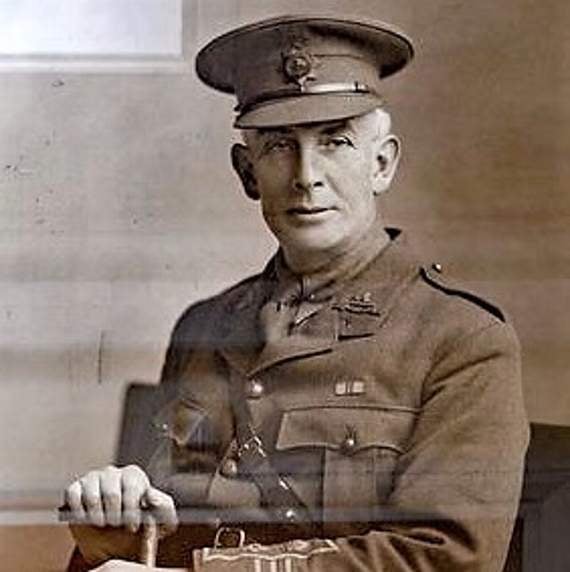
John W Jessop was the first Crediton player to be selected for Devon, born in 1861 in Bombay to a Military family whose home was in Crediton. Jessop made his first team debut for Crediton in 1877 at the age of 16 against Exeter Second XV, ironically, his brother George was in the Exeter team!
He was a clever, strong running centre and very sound in defence. In 1879, he had benefitted from the change in the way the Devon team was selected and made his County debut on January 3, 1880 in a 0-0 draw against Somerset at Weston-super-Mare.
At this time, Devon were only playing one game a season and always against Somerset. He missed the games in 1880 and 1881 but the following season when Devon played two games, Jessop was recalled to the side and played a significant part in the victory over Somerset.
It was reported that the victory was due in great measure to the brilliant play of R.S Kindersley (Exeter and Oxford University and who was in fact Devon’s first England International) and J.W. Jessop (Crediton and Bartholomew’s Hospital), who also converted one of the tries.
Jessop made six appearances for Devon between 1879 and 1883, he scored the only try of the game against United Hospitals in December 1883.
During the years he spent studying, he managed to combine being a medical student in London with playing rugby for Blackheath and when at home he would turn out for Crediton and occasionally for Exeter.
On qualifying Jessop joined a medical practice in Horncastle, Lincolnshire and soon became a hugely popular member of the local community.
He joined the local Volunteer Force and rose to Lieutenant Colonel and at the outbreak of World War One, the Horncastle Company were mobilised and in March 1915 were sent to France.
Lieutenant Colonel Jessop was killed on June 4, 1915 by a German shell, he was 54 years-old. There is a Commemoration Plaque in the Church of The Holy Cross.
CHARLES LOVESEY
Charles George Lovesey was probably the biggest influence on Crediton RFC since the Club was first founded right through to the early 1900’s. Born in Oxfordshire, Lovesey moved to Crediton having gained a teaching post as an assistant master at the Grammar School in 1884.
His love of the game soon brought him to the rugby club and within 12 months he was making his debut for Devon against Hampshire, a game that Devon won by four tries to nil.
Lovesey could play almost anywhere in the forwards in fact he was versatile enough to play anywhere from one to 15. In addition to his playing for both Club and County, Lovesey also took up refereeing and became one of the top officials in the County.
In all, Lovesey played eight times for Devon between 1885 and 1889, his final game was against the New Zealand Maoris when he received a serious injury and decided to retire from playing.
He was immediately elected on to the Devon Committee in 1889 and re-elected as Vice Chairman in 1890. However, he decided that there was still some life left in his legs and returned to playing. As a consequence and because players were not eligible to sit on the County Committee, he resigned.
He continued playing for Crediton until 1892 when he did retire. However, he was persuaded to go back on the County Committee, where he remained until 1904.
Lovesey was a keen cricketer too and turned out for both Crediton and Shobrooke before he eventually left the area in 1905, moving to Sussex where he was appointed the headmaster of a private school.
Rev’d Thomas Wood Robinson, another schoolmaster at the Grammar School, originally from Shropshire, joined Crediton in 1887 and soon proved to a strong running winger.
He gained a reputation around the county for his pace and he came to the attention of the County Selectors. Sadly, he only ever played one game for Devon, against Somerset on January 5, 1889, Devon lost 0-19. He was made Club Captain in the 1889-90 season, and continued playing for the Club until 1894.
He left the area to take up a posting as Chaplain to The Royal Navy at Dovercourt, Essex. Crediton must have made its mark on Thomas Robinson as his house in Dovercourt was named “Kirton”.
GEORGE BODDY
George Boddy was an outstanding back row forward whose career was tragically cut short when he was in his prime at the age of 25.
Born and bred in Crediton, he was one in a very long line of the Boddy family that played for the Club.
George was also one of the many Kirtonians who worked in the shoe trade at that time. He made his debut in the First XV in 1886 and would soon become one of the first names on the team sheet.
He was one of the brightest prospects of his age in the County and it was no surprise that he was selected in December 1889 against Blundell’s Old Boys scoring a try in the 7-4 victory.
He followed that up with another try against Gloucestershire and there were another three appearances for the County that season.
Strangely and despite very favourable reports in each of his games, he only made one further appearance for the County and that came almost a year later against Cornwall at Falmouth.
Unfortunately for George, Crediton was never really a fashionable Club so far as County selection is concerned and his loyalty to the Club probably cost him more caps.
Sadly, he was taken ill in November 1893 and died. At the time he was the Club Captain.
Paul Harris
Comments
This article has no comments yet. Be the first to leave a comment.