
NOT a week goes by when I don't hear about the impact antisocial behaviour (ASB) is having on an individual, business or community.
It includes hate crime, continuous noise or parties, vandalism, misuse of communal areas or public spaces, criminal behaviour, alcohol related disturbances, nuisance vehicle noise, verbal abuse, harassment, intimidation or threatening behaviour and isn’t limited to urban areas.
ASB can detrimentally affect someone's quality of life, and no one should have to put up with that. That is why it has been chosen as one of four key priorities I am committed to tackling in my Police and Crime Plan, which sets out the strategic priorities for policing.
This week is ASB Awareness Week – a national campaign that aims to encourage communities to take a stand against ASB and highlight actions those experiencing it can take. It is organised by Resolve, the UK’s leading ASB and community safety organisation.




New research from YouGov, commissioned by Resolve in April 2026, shows that ASB is both widespread and worsening, with over half of UK adults having experienced or witnessed ASB in the last three years, and six in ten saying more needs to be done to tackle it.
However, in Devon and Cornwall in the last 12 months, we have seen a 10.2 per cent reduction in ASB incidents, which demonstrates the hard work done not only by our brilliant neighbourhood policing teams but also by Community Safety Partnerships, housing authorities, and other agencies who work together to address community issues.
The police work closely with partners such as local councils to tackle ASB. My office funds several key initiatives and services to combat ASB. These include hotspot policing, street marshals and the safer streets project, to name just three.
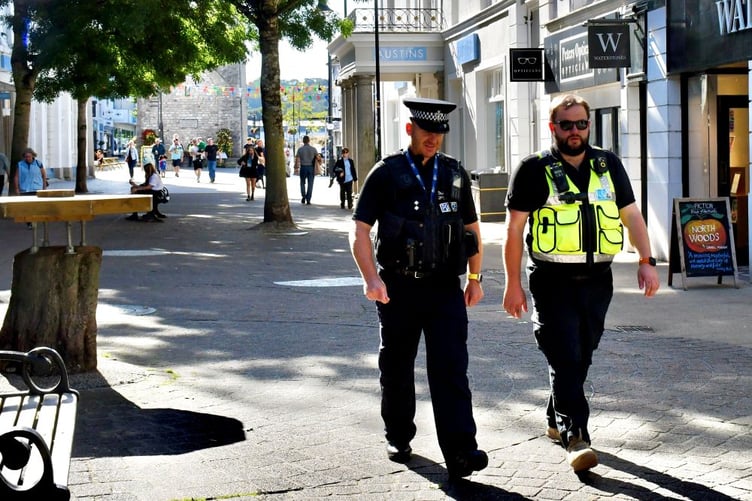
Through partnership work, my office, Devon & Cornwall Police and other agencies have taken great strides to reduce disruptive behaviour. Closure Orders on commercial premises linked to ASB, Community Protection Warnings (CPWs) and the presence of town centre officers is making a real difference to people's safety.
Much that is done to tackle ASB wouldn’t be possible without our Community Safety Accreditation Scheme (CSAS) accredited individuals who use powers delegated by the Chief Constable to improve safety in our communities. These include Police Community Support Officers, street marshals, Tri-Service Safety Officers and others who work alongside frontline staff. Powers include issuing fixed penalty notices for specific offences, directing traffic, and confiscating controlled substances such as alcohol and tobacco.
As of April 2026, there were 233 CSAS-accredited people in Devon and Cornwall – with 37 schemes across the two counties. In the last nine months of 2025, CSAS accredited street marshals carried out 11,732 hours of foot patrols in anti-social behaviour hotspots across Devon and Cornwall.
We are an exemplar of the use of CSAS powers, I am enormously proud of how the scheme has helped to make the places we love safer.
Comments
We've recently changed our login process. If you have an account for commenting, you will need to re-register on the login window.
This article has no comments yet. Be the first to leave a comment.