
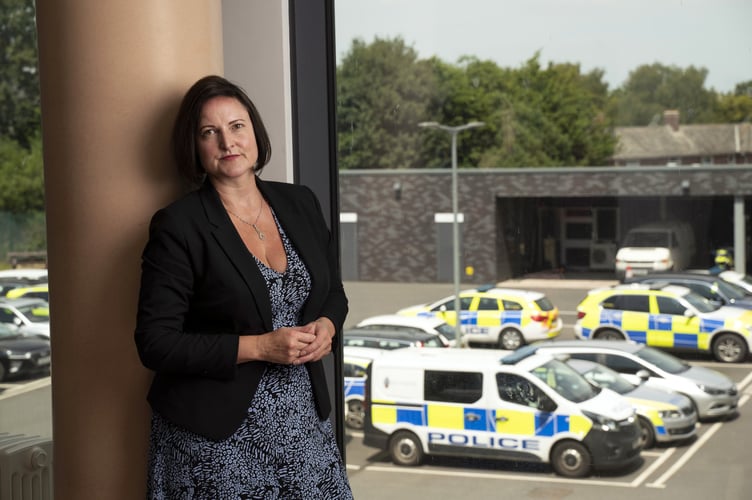
TO uphold my commitment to be your voice in policing, my office has launched a dedicated website section to keep you updated on what the government’s policing reform proposals specifically mean for Devon, Cornwall and the Isles of Scilly.
Precise details about the future of policing, how it will be governed locally and what force boundaries will look like are still waiting to be confirmed.
But what we do know is that very significant changes are on the way and I will endeavour to share that information with you when it becomes available.
The wheels of change began to be put in motion back in January when the government published its White Paper on policing reform. It is the biggest redesign of policing in England and Wales since the 1960s.




The proposals for the reform and modernisation of policing include: reducing the number of police forces through mergers; the introduction of a National Police Service to lead on serious and organised crime and counter terrorism; abolishing Police and Crime Commissioners (PCCs) from May 2028; a future review of the police funding formula; and establishing new Police and Crime Boards where powers currently cannot be transferred to a regional mayor.
Timescales and details for many of these reforms are not yet clear, and many of the structural changes are expected to take place beyond 2029.
In March, it was announced an Independent Review of Police Force Structures will be chaired by Lord Hogan-Howe. This is already under way and a report is expected to be made back to the Home Secretary at the end of summer 2026.
Although disappointingly it does not allow much time for evidence to be gathered, I am trying to ensure the unique geography and specific policing requirements for our region, including an influx of tourists in the summer, are fully taken into account.
I, along with members of my executive team, have been meeting with other PCCs and CEOs across the South West to discuss the implications of future policing changes and are also participating in a wider targeted call for evidence, along with the Chief Constable and partners across the region.
The White Paper also covers a range of other issues, including reforms to the arrangements for appointment and dismissal of chief constables and police conduct matters.
To help you understand the complexities of the work around police reforms, our website features dedicated sections to help everyone navigate through the different strands, including a useful timeline which will be kept updated. I will also publish information about my evidence submissions, letters and activities so you know what I am doing on your behalf.
I would also encourage everyone to share your views on how you would like to see policing structured in the future by taking a few minutes to fill out my annual survey.
When the results were collated at the beginning of the year, 66 per cent of survey respondents said they would like Devon and Cornwall Police to continue in its current form.
Comments
We've recently changed our login process. If you have an account for commenting, you will need to re-register on the login window.
This article has no comments yet. Be the first to leave a comment.