

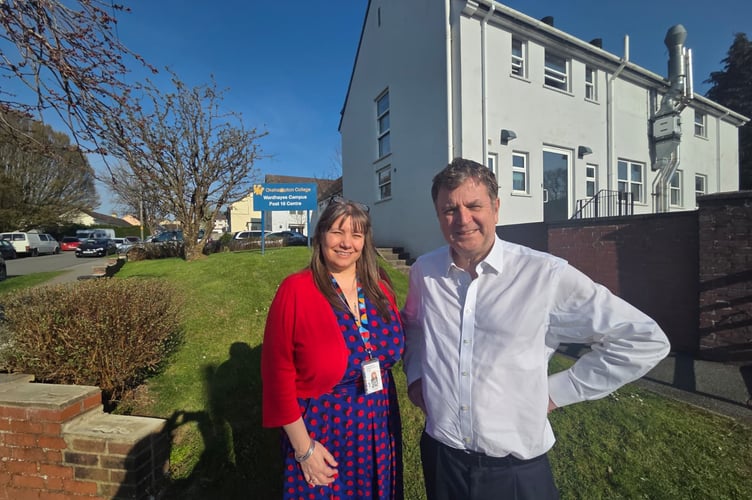
ONE of the greatest privileges of representing Central Devon is seeing first hand the energy and resilience of our local communities.
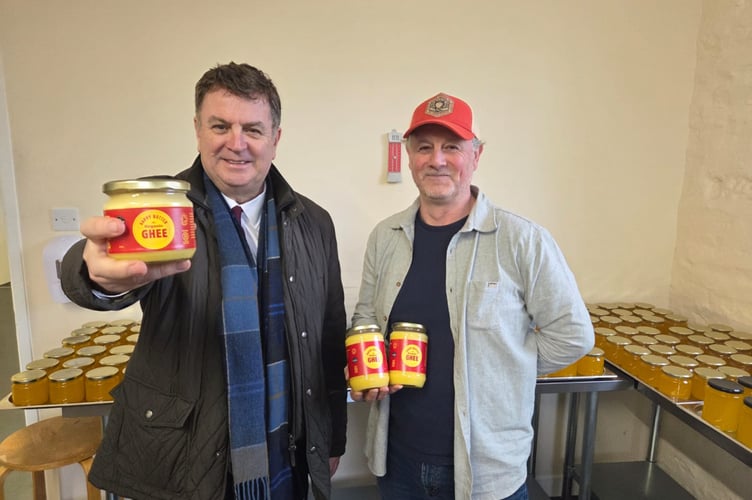
Recently I visited Happy Butter Ghee in Buckfastleigh and The Promise School following its recent devastating fire.
Both visits told a powerful story about how people in our part of the world are striving to build something better, often despite significant headwinds some created by government.
At Happy Butter Ghee I met Rupert and heard how a small kitchen experiment has grown into a high quality Devon food business rooted in family and in our local area.




Their focus on organic ingredients and traditional production methods is exactly the kind of added value that helps British food stand out in an increasingly competitive market.
The UK organic market is now worth around 3.7 billion pounds and has roughly doubled in a decade, with sales growing by more than seven per cent in 2024 alone.
That is a huge opportunity for rural counties like Devon where we have the skills and the landscape to produce some of the best food in the world.
More broadly, small and medium sized enterprises remain the backbone of our economy. There are now around 5.7 million private sector businesses in the UK, with well over 5.6 million of them classed as small or medium sized.
They account for the vast majority of firms and support millions of jobs. When a business like Happy Butter Ghee succeeds it contributes not only to local employment but to national growth and tax revenues which in turn fund our public services.
Yet too often government policy feels designed in Whitehall spreadsheets rather than around the needs of firms in places like Buckfastleigh, Okehampton or Crediton.
High energy costs, complex regulation and uncertainty over long term tax policy are repeatedly raised with me by local employers.
Ministers talk about supporting enterprise but businesses still battle with late payments, planning delays and skills shortages that could be addressed far more decisively.
The visit to The Promise School brought home a different challenge. Following the devastating recent fire, I met staff and heard how pupils are being supported and how learning is being kept on track.
The dedication of the leadership, management and teaching staff is remarkable and we are fortunate to have such committed professionals serving local families.
But nationally the picture on education should concern us all.
Persistent absence in England has risen sharply since before the pandemic and remains stuck at close to one in five pupils in some recent data, far above historic norms.
Severe absence is also higher than it was, meaning tens of thousands of children are missing most of their schooling.
Local staff are doing everything they can, often going well beyond their formal duties.
Too often central government has been slow to grip the scale of the attendance crisis, slow to back schools with targeted support and hesitant about setting clear expectations for parents and pupils alike.
Warm words are not enough when a generation of children risks being left behind.
My message in Westminster is simple. Back our small businesses with stable, practical policies that encourage investment and innovation.
Back our schools with the resources and support they need to get every child attending and achieving.
Here in Central Devon we are doing our bit. It is time for the government to match that commitment.
Comments
We've recently changed our login process. If you have an account for commenting, you will need to re-register on the login window.
This article has no comments yet. Be the first to leave a comment.