

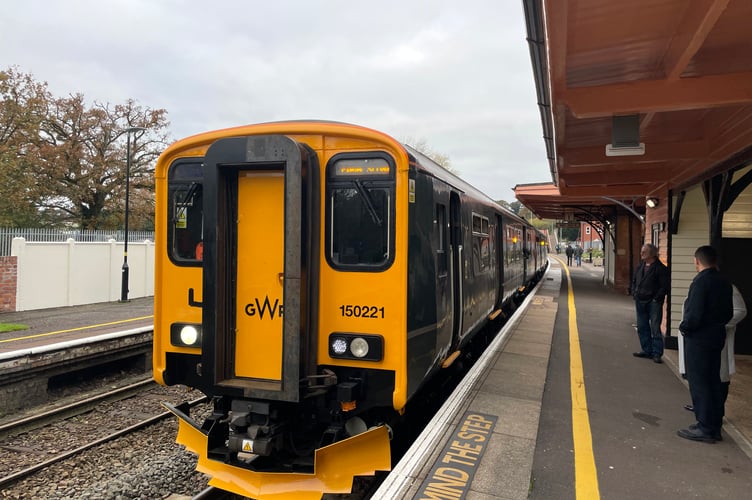
I RECENTLY met representatives of the North Devon Line Rail Promotion Group at Crediton Station to discuss the future of our line, rail resilience and the growing impact of severe weather on services.
The message from that meeting was clear. This route is not a luxury. It is a vital artery for communities, commuters and students who depend on it every day.
Across Britain rail use has been rising again with around 467 million journeys made in just one recent summer quarter and passenger revenue nationally now back above pre pandemic levels in real terms.
Yet too often our infrastructure has not kept pace. Extreme weather events are becoming more frequent and more intense.




Nationally we have seen weather related disruption shave several percentage points off rail performance in recent years and the cost of weather related delays and repairs runs into hundreds of millions of pounds.
When a line like the North Devon route is hit the consequences for education, work and local businesses are immediate and severe.
The North Devon Line itself has seen remarkable growth.
Usage at its dozen stations is estimated to be more than 60 per cent higher than before the pandemic.
That is a success story which reflects investment in passing loops and modern trains but it also creates pressure.
Trains are often crowded at peak times with large numbers of Exeter College students and commuters travelling into Exeter and beyond.
When services are cancelled or replaced with buses many simply cannot get where they need to be on time.
Climate change is amplifying existing weaknesses in the rail network.
We know that across the country landslips have increased sharply over the past decade and that coastal and river valley routes like ours are particularly vulnerable to flooding, erosion and intense rainfall.
Network Rail is investing billions in weather resilience over the current control period including strengthening earthworks and sea defences and improving drainage but there remains a real question as to whether this is enough and whether the South West is getting its fair share.
This is where I am deeply concerned about the approach of the current government.
Ministers talk a great deal about levelling up and long term decisions but too often the South West rail network feels like an afterthought.
Major decisions on rail investment are repeatedly delayed while our region waits in the sidings.
At the same time billions are being reallocated from cancelled national projects with insufficient clarity about how much of that money will actually reach lines like ours which face real climate risk today.
I will continue to press Network Rail and the Department for Transport to treat the North Devon Line as the strategic route it is.
That means long term funding for resilience works, better protection against flooding and landslips and sufficient rolling stock so that trains are not routinely overcrowded.
It also means a joined up plan so that students and commuters are not left stranded when bad weather hits. Reliable rail is essential to opportunity and growth in our part of Devon and it is time national decisions fully recognised that reality.
Mel Stride MP X: @MelJStride Instagram: @melstridemp Website: www.melstridemp.com
Mel Stride
MP for Central Devon
Comments
We've recently changed our login process. If you have an account for commenting, you will need to re-register on the login window.
This article has no comments yet. Be the first to leave a comment.