

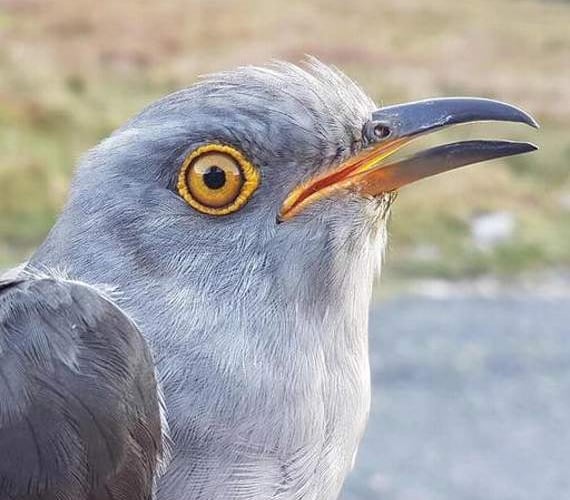
FOR many people the sound of a cuckoo is associated with summer, but it is a sound we are hearing less-and-less as UK breeding populations have halved in the last 25 years.
In England, almost three quarters of Cuckoos have disappeared across this period and scientists at the British Trust for Ornithology BTO are working towards finding what’s behind this large decline.
Eleven Cuckoos have had satellite tags fitted in Warwickshire, Nottinghamshire, Norfolk, Wales and Scotland, and all have been given names - Columbus (Scotland), Ellis (Scotland), Grove (Norfolk), Victor II (Scotland), JAC (Wales), Calypso (Worcestershire), Attenborough (Norfolk), Harry (Worcestershire), Clive (Worcestershire) and two to be confirmed.
The BTO first began following Cuckoos on their migration in 2011, initially to discover where they went for the winter months and the routes they might take to get there. They found that they winter in and around the Congo basin and get there via Italy or, for some Cuckoos breeding in England or Spain. They also found that the survival rate on these two routes is very different, with more birds surviving on the Italian route than the Spanish one and that this difference appears to be contributing to the population decline in England, although the reasons for it are, however, so far not clear.


Early indications are that it might partly be related to conditions here in the UK putting English Cuckoos at a disadvantage even before they begin their 5,000 mile journey south, and if this proves to be the case the information these eleven Cuckoos collect may well help inform conservation action here in the UK to help reverse the decline.
Cuckoos are essentially African birds, very much birds of tropical forests that move north to breed, undertaking what BTO lead scientist on the project Dr Chris Hewson likens to a “polar expedition,” even in the summer Northern Europe must often feel cold to them.
Long-distance migration is full of hazards and many of these 11 birds won’t make it to their winter destination and back again but they will provide important information to BTO scientists along the way.
Dr Hewson said: “We have been following an incredible Cuckoo called PJ for the last five years. He’s migrated more then 75,000km during that time and is still going strong, but many of these new cuckoos will not fare so well.
“Some will be lost as they migrate across Europe for the first time, and how each fares will help us understand how the conditions they encounter and the pressures they face along their migration routes interact and contribute to population changes.
“Having tagged some birds in Scotland and Wales this year, it will be especially interesting to see how birds tagged in different parts of the UK fare.”
Anyone can follow these eleven Cuckoos and PJ as they head towards the Congo over the next few months at www.bto.org/cuckoos .
Comments
This article has no comments yet. Be the first to leave a comment.