

SAINT Boniface was born in Crediton about 680AD. He was baptised Wynfrith or Winfrid (from the Saxon words wine – friend and frith – peace).
He entered the monastery in Exeter and in his early teens to a monastery at Nursling, then ordained priest aged 30.

In May 719, Pope Gregory II commissioned him as a missionary to Germany. He was given the name Boniface, meaning maker of good or good deeds.
In 722 he was consecrated a bishop “to preach to the heathen east of the Rhine”.
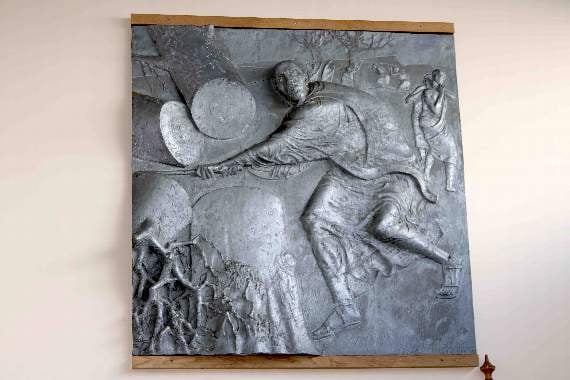
On his arrival in Hesse, Boniface struck at the root of pagan superstition by a single act, he felled Thor's oak at Geismar.
A single small fir tree, growing in its roots is possibly the origin of the Christmas tree.



In 732 Boniface was consecrated archbishop and in 741 he founded the abbey of Fulda. in 745 he was given Mainz as his cathedral.
In 754 his life ended in martyrdom at the hands of a pagan band.

Boniface has been described as “The greatest Englishman of all time” and “the Englishman who has had a greater influence on the history of Europe than any other Englishman”.
He is celebrated on June 5 each year.
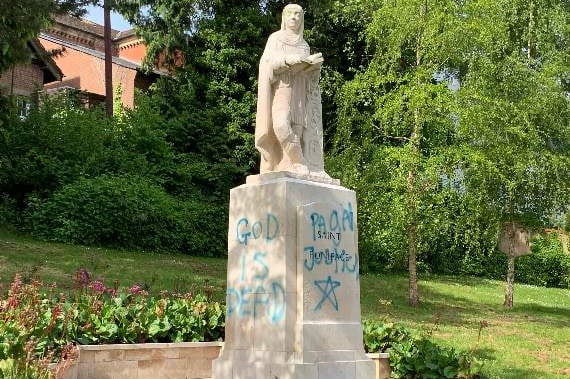
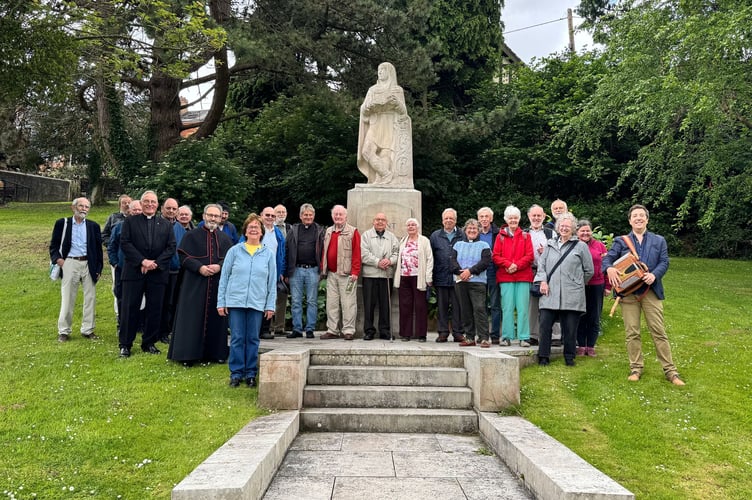
The statue of St Boniface in Newcombes Meadow, Crediton, was unveiled by Princess Margaret on July 24, 1960.

In 2019 Boniface was declared Patron Saint of Devon.
In May 2020 his statue in Newcombes Meadow sustained graffiti/criminal damage of a religious nature.
This included Pagan symbols and writing.
Boniface has had an enormous impact on English and European history.
He has been described as the Apostle of Germany and is revered in Holland.
A relic of St Boniface, a piece of bone from one of his fingers, is housed in the National Shrine of St Boniface inside the St Boniface Roman Catholic Church in Crediton.
Comments
We've recently changed our login process. If you have an account for commenting, you will need to re-register on the login window.
This article has no comments yet. Be the first to leave a comment.