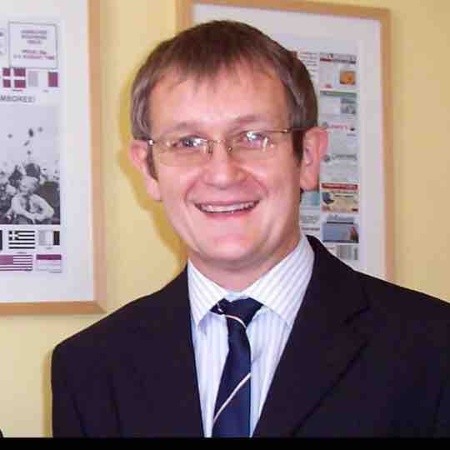
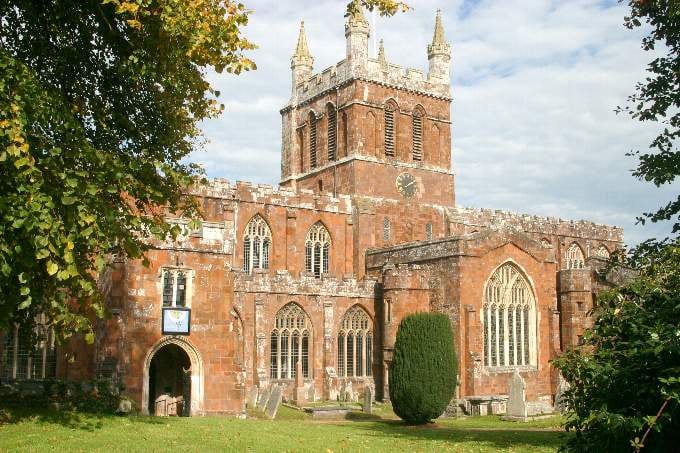
CREDITON Parish Church is celebrating the centenary of its highly-regarded organ this weekend with a recital being given by Dr Peter King on Sunday, November 14 at 3pm followed by tea and cakes in the Boniface Centre and Choral Eucharist at 6pm.
These are all free to attend but donations would be appreciated. Proceeds will be given to the Friends of Crediton Parish Church and the Church Governors who maintain and repair the organ.
The history of the present organ started in 1915 when the old organ was worn out.
The organist at the time, a talented Mr Harold Organ FRCO, drew up plans for a new organ, nothing but the best, to be built by Messrs Harrison and Harrison, suppliers to English cathedrals.
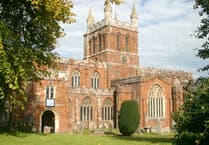

He was tragically killed in action in 1917 at Ypres before his plans could be implemented. However, his designs were carried through by his successor, Cyril Church (a rather appropriate combination of names!), and the new organ was opened in November 1921 and dedicated as a War Memorial.
The plaque at the organ reads: “The Organ was erected in 1921 to the Glory of God and in Honoured Memory of the Men that Fell in the Great War – Their Names are Recorded in the Tablet in the South Aisle. Only those are crowned and sainted who with grief have been acquainted making nations nobler, freer.”
The three-manual Harrison and Harrison organ, considered by many to be among the finest in Devon, has survived in its original state.
It had been known since the 1980’s that a complete restoration of this fine instrument was necessary.
This dream was realised in 2001 (with the addition of a fine organ case in English oak).
During this last year there have been repairs supported by the Friends of Crediton Parish Church and Church Governors in readiness to celebrate the organ’s centenary.
Stella Stephens, on behalf of the church, said: “We are delighted that Dr Peter King will be playing this wonderful organ in celebration of its centenary.”
Chris de Souza describing Peter King’s Liszt CDs on BBC Radio 3’s “CD Review” said: “He is a virtuoso of world class... I’m astonished at his bravura; nothing fazes him... and he plays with such élan, and with such passion, such commitment”.
Organist Emeritus of Bath Abbey, Peter was Director of Music at the Abbey (1986-2016). Under his direction the Abbey Choir visited France, Germany and Holland, and released eight CDs. It broadcast on BBC TV and radio, regularly singing Choral Evensong on BBC Radio 3.
Peter’s CDs as Director and Soloist have been acclaimed by the critics. A CD of works for Organ and Orchestra with BBCNOW, (Poulenc, and Rheinberger and Respighi), has been particularly singled out for praise, being the recommended recording of the Poulenc Concerto in “Building a Library” on BBC Radio 3’s CD Review; also “Editor’s Choice” in both BBC Music Magazine and Gramophone which describes the CD as “a disc of real distinction... leaves the competition standing... even reluctant converts are likely to be overwhelmed by this thrilling disc. The sound of the Bath Abbey Klais organ matches the life-affirming playing of Peter King. The whole recording is filled with a love of making music."
Peter was the CBSO’s Assistant Chorus Master during Sir Simon Rattle’s reign as Musical Director, playing on Rattle’s EMI recordings of Mahler’s Resurrection Symphony and Symphony-of-a-Thousand. Highlights have included recitals at Westminster Cathedral’s Grand Organ Festival, King’s College, Cambridge, St Paul’s Cathedral and Westminster Abbey.
Peter King holds the honorary degree of Doctor of Music from the University of Bath.
The programme for the recital in Crediton includes Postlude in D minor Sir Charles Villiers Stanford; Two pieces by Franz Liszt - Funérailles, October 1849, (from Harmonies Poétiques et Religieuses) and Consolation in Db; Two movements from Concerto 13 in F by George Frederick Handel “The Cuckoo and the Nightingale” – Larghetto, Allegro; Fantasia in G minor by York Bowen; Romanza and Allegretto by William Wolstenholme finishing with Grison’s Toccata in F.
This musical selection covers the theme of Remembrance along with music that would have been contemporaneous when the instrument was built.
Comments
This article has no comments yet. Be the first to leave a comment.