

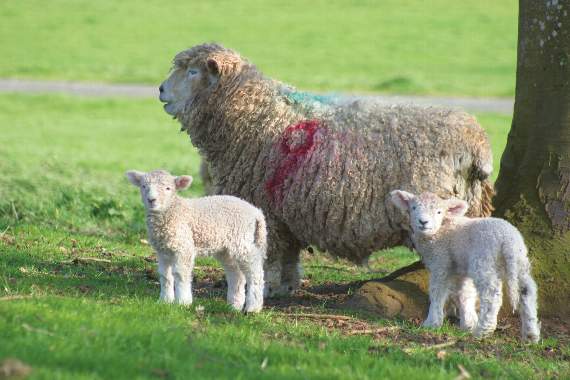
LAST month farmers in Sandford, Cheriton Fitzpaine and Lapford reported horrific attacks by dogs on sheep and lambs which resulted in many being killed or seriously injured.
The spate has prompted appeals to dog owners to keep their pets under control and on a lead when near livestock.
Statistics released in February last year by rural insurer NFU Mutual, revealed that the cost of dog attacks on livestock cost South West farmers more than £200,000 during the previous 12 months.
A survey conducted by the insurer revealed that 63 per cent of dog owners are letting their pets roam free in the countryside, despite half admitting their dog doesn’t always come back when called.


Now is peak lambing season locally and NFU Mutual is calling for dog owners to ensure their pets are under control at all times when livestock are nearby and to report out-of-control dogs to a local farmer or the police.
Roz Hills, South West Regional Manager for NFU Mutual, said: “A significant number of dog owners still don’t realise that their much-loved pet is capable of attacking and killing large numbers of lambs and sheep. Even if a dog doesn’t make contact, the distress and exhaustion of the chase can cause sheep to die or miscarry their lambs.
“Although we are encouraged that 95 per cent of dog owners would put their pet on a lead if a sign warns livestock are nearby, we’re alarmed that more than half are leaving their dogs unsupervised outside their homes when they are out – particularly when one in six admits their dog has escaped from home.”
The research found a steady increase during the past two years of dogs who are able to go outside unaccompanied when their owners aren’t in (56 per cent in 2020, rising from 52 per cent in 2019 and 43 per cent in 2018). One in six owners admitted their dog had escaped from home in the past.
“This confirms farmers’ fears that a significant number of dog owners are letting their dogs roam free unsupervised.
“Whether they don’t know or don’t care about the carnage their pets are causing, these dog owners are giving a bad name to the responsible majority who do keep their pets under control.”
Previously most dog owners (61 per cent) said they would try to stop a dog chasing a sheep in the countryside and supported measures to crack down on the problem of livestock worrying.
Three quarters of dog owners said they would support heavy fines, 66 per cent would support a ban on dogs from livestock fields during lambing season, while 57 per cent would back laws enabling DNA testing of dogs and 42 per cent would support owners being banned from keeping dogs if their pet had been involved in an attack.
The advice is:
• Always keep dogs on the lead when walking in rural areas where livestock are kept. Release your dog if chased by cattle.
• Be aware that even small lap dogs can attack and kill farm animals.
• Report attacks by dogs and sightings of dogs roaming the countryside to local farmers or the police.
• Familiarise puppies with farm livestock from a young age to reduce the risk of them attacking sheep or cattle as adult dogs.
• Don’t let dogs loose in gardens adjoining livestock fields – many attacks are caused by dogs which escape and attack sheep grazing nearby.
• As a last resort, farmers have the right to shoot a trespassing dog which is worrying livestock. Farmers have the right to protect their livestock. Ensure you are aware of the legislation and your legal responsibilities.
• Where a dog causes damage by killing or injuring livestock, any person who is a keeper of the dog is strictly liable for the damage. Action may result in the dog being put down. Livestock worrying is a crime.
• Walk dogs well away from livestock and stick to dedicated footpaths.
• On Access land dogs must be on a lead between March 1 and July 31.
• Livestock worrying taking place at the time is considered an emergency. Dial 999 and explain there is a dog attacking livestock with a precise location.
• Livestock owners can advise dog walkers by giving clear notices advising of the presence of livestock, location of footpaths and appropriate fencing.
• Email: [email protected] if livestock has been chased or attacked and the dogs have left the location.
• Anyone able to offer information relating to livestock worrying is asked to email: [email protected] , call 101 or Crimestoppers anonymously on 08007 830137.
• Farmers are advised to join Devon and Cornwall Alert, Watch schemes and local social media groups so that they can find out what is happening in their area.
Comments
This article has no comments yet. Be the first to leave a comment.