

WHAT is better than one U3A Zoom Monthly Open Meeting? - two Zoom meetings on totally different subjects: cybersecurity and ice caves! Perhaps there is a tenuous link of finding your way through potentially dangerous situations?
The first well-attended talk on Cybercrime and Staying Safe Online was by two specialists from the Devon and Cornwall Police Cybersecurity Section.
They stressed that crime has changed: traditionally there were criminals present at each crime scene but now, with the growth of computer usage, one anonymous offender can remotely undertake multiple offences and we must all be on our guard.
We are all vulnerable to attack.
There is about 600 cyber-related crimes reported to the Devon and Cornwall police each month. The threat is so great that the UK government has placed cybersecurity in Tier 1 - the highest rating.
The two experts suggested many ways to keep ourselves safer including changing the admin passwords on routers, using stronger passwords, looking at spelling, grammar and web addresses carefully in Phishing emails, not giving credit/debit card details requested by official looking emails or texts, and “romance” fraud.
You can also easily check if your personal details have been lost by companies by logging onto “have I been pwned”. The data may remain on the “dark web” for a while before it is used by criminals.
The two speakers then discussed using platforms like Facebook safely: if an offer appears “too good to be true” it probably is and its function is to collect your information; seemingly innocent online quizzes could also be collecting personal data. Again this data may not be used immediately.
Is that new “friend” on Facebook (or other platform) someone you actually know? (I used to discuss this with students when I was teaching - what makes a friend? How do you know who you are actually speaking with?). The cyber specialists gave an example of a message reading “I’m Santa Claus, don’t you want to be my friend?”
We also learnt to be aware of free apps as these may allow access to many things on your device. Apparently “Linkedin”, used by many professionals, collects data and allows targeted advertisements.
Many untruths also spread across the web with, seemingly, little checks on validity.
In summary, we all have to be aware of online safety for ourselves and others - it is really worth researching how to keep ourselves as safe as possible and “let the user beware”.
Thanks to our guests who gave sound advice and guidance.
Later during the month we logged on again to hear Ian Barclay speak about “The Casteret family and The Grotte de Casteret Ice Cave” which is situated in the Pyrenees, the mountain range between France and Spain.
Ian, who was part of the British Expedition which explored the caves in the 1960s, first explained a little of the geology of the area.
It consists of limestone which, being soluble, is dissolved as water passes through it, leaving behind a myriad of tunnels and caves.
One of these caves is the Casteret Ice Cave discovered by Norbert Castelet.
Norbert made a living exploring the treacherous cave system and financed his exploits by writing books about his adventures. These may have been a little embellished to make them more readable.
He used to, apparently, scrawl “Castelet was here” on the walls of his discoveries to make clear to other cavers that they were not the first to come across places.
When Norbert discovered water in tunnels he used to free-dive (without a rope) through them not knowing where or how far away the next air filled cave would be.
It was quite a family affair as Norbert’s wife was also an explorer (she tragically died in childbirth) as were their daughters.
Ian showed us a photo of when Maude, one of the daughters, almost coming to a “sticky end” as she disappeared head first down an ice-lined tunnel only to be, thankfully, pulled back by her boots by her father!
Ian assured us that when the British expedition explored the caves they all had the proper safety gear. He showed us some amazing photos of the Ice Cave and the main hall where the walls were covered in solid ice.
We wondered at the “Niagara” Icefall which was a sheer drop of ice to a frozen lake below. We also saw a stunning image of the Crystal Tower which was formed as snow came through a hole from the outside and having collected no minerals was crystal clear. This tower grows until its mass reaches a point where it collapses then starts to reform.
Unfortunately most of these ice formations are receding as climate change takes its toll.
Thanks to Ian for an interesting talk.
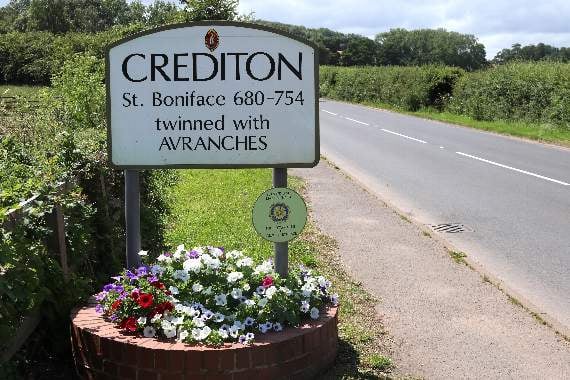
Crediton and District Third Age Group has more than 200 retired or semi-retired members.
Membership costs just £12 a year.
For more information please visit our website: U3asites.org.uk/crediton .
Jo Poulton
Comments
This article has no comments yet. Be the first to leave a comment.