

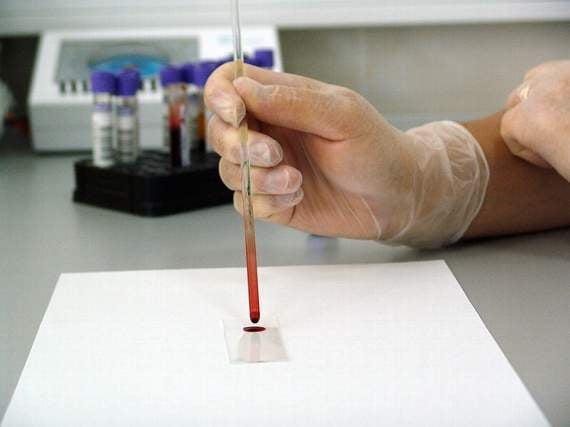
ACCORDING to a study published in "Nature Medicine," a new blood test could detect Alzheimer’s disease and other neurodegenerative diseases more than 10 years before symptoms develop.
Alessio Brunello, Pharma analyst at Global Data said: "Finding a biomarker in Alzheimer’s that translates into clinical meaningfulness has been a real challenge for the field of biomarkers in the central nervous system.
"The current way to definitively diagnose Alzheimer’s is through a number of invasive and expensive procedures, and a PET scan can only detect amyloid betas in the brain with 20 per cent to 30 per cent accuracy.
“There is a great need for simple, inexpensive, and non-invasive tests that could be applied on a large scale to screen for Alzheimer’s.



"The diagnosis process could take months and blood tests in development for Alzheimer’s could satisfy this need with accuracy close to 90 per cent and replace CSF testing and brain imaging.
He added: “A major challenge impacting the development of blood-based biomarker tests is the blood brain barrier, which functions to create a protective barrier around the brain and limits the flow of substances in or out of the CNS.
It is quite difficult to determine whether peripheral measures of putative biomarkers are actually representative of what is going on within the section of the brain and CNS enclosed by the blood brain barrier.
This difficulty has limited the development of biomarkers to a level where they can have clinical utility.
“If physicians can easily and effectively detect Alzheimer’s in its early stages, they can enrol patients in experimental trials for preventative treatments as lack of qualified patients for clinical trials is one of the primary reasons for drug-trial failures in Alzheimer’s.
“Having patients more carefully evaluated and referred to specialists who can administer more complex cognitive exams or utilize the latest diagnostic biomarker tools can confirm an Alzheimer’s diagnosis and enable researchers to develop preventative treatments that are most likely to be effective.”
Comments
This article has no comments yet. Be the first to leave a comment.