

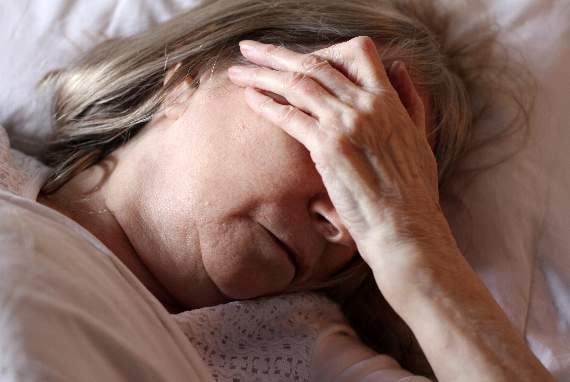
A CREDITON woman who suffers from M.E. tells us how the condition affects her life, and appeals to people to find out more about it.
She explains: "I have had M.E. in varying degrees for 33 years, the first 13 and the last six in a very severe form, bedridden, helpless and needing 24-hour care.
"I have exhaustion so extreme I’m often barely conscious but that’s just one of a huge range of horrendous symptoms, as every bodily function is badly affected.
"M.E. has been described as ‘The Living Death’ for the most severely affected, lying in darkened silent rooms, in agony, tube-fed and unable to communicate.




"Contrary to some beliefs, there is no treatment or cure and it can be fatal.
"The illness is usually triggered by viruses, including a cold, flu, glandular fever, etc.
"The initial infection may fade but the patients’ health (for reasons yet unknown) does not improve and often deteriorates.
"Very few people fully recover, many are too ill to live any kind of normal life for years on end and 25 per cent remain extremely ill and bedridden indefinitely.
"Yet, this unbearable illness has been dismissed, ignored and not taken seriously. It has not been taught in medical schools and doctors and other medical professionals I’ve encountered over the years have had no knowledge or understanding of the illness. Most have never heard of it even though there are three times as many people with M.E. than with M.S.
"Perhaps this will change now that Covid-19 leaves many patients with an illness, currently called Long Covid, that, according to scientific medical experts, is ‘remarkably similar’ to M.E., with multiple overlapping symptoms.
"Maybe the disbelief and hostility directed at people with M.E., adding yet another level of distress to their suffering, will finally end and the medical world will find ways to help all these shockingly ill patients who are desperate to get their lives back.
"Compared to other serious conditions, there has been almost no funding to research causes and potential treatments of this devastating illness.
"For M.E. Awareness Week, I’d encourage people to discover more (meassociation.org.uk) and to offer much needed support.
"Thanks to my loving, caring partner for typing this. He has given up his career, hobbies and social life to care for me. I’m so lucky to have him."
Name and Address Supplied
What is M.E.
Most doctors now accept that ME/CFS and PVFS (myalgic encephalomyelitis/chronic fatigue syndrome and post-viral fatigue syndrome) are genuine and disabling illnesses.
The World Health Organisation (2016) classifies ME (and PVFS) as a disease of the central nervous system i.e. neurological. And, although CFS is not classified as a distinct clinical entity, it is indexed to G93.3.
ME and CFS are also now listed under diseases of the nervous system in SNOMED CT – the electronic classification system used by the NHS.
The Department of Health officially recognises ME/CFS to be a "debilitating and distressing condition" and more recently "recognises CFS/ME as a neurological condition of unknown origin".
The 2002 report to the Chief Medical Officer (CFS/ME Working Group 2002; section 12) reinforced the serious and debilitating nature of ME/CFS.
Comments
This article has no comments yet. Be the first to leave a comment.