
DEVON County Council is calling on the government to heed the advice of its own officials across Whitehall departments as it prepares to make a crucial decision on the future structure of local government across the county.
Councillor Julian Brazil, Leader of Devon County Council, has warned that recent events in Essex highlight the risks of ignoring expert financial and operational assessments when determining how councils are reorganised.
In Essex, government ministers chose to pursue a five-unitary authority model despite advice from officials from across Whitehall, and including the Treasury, that an alternative structure would be more financially sustainable.
Government documents and correspondence reveal that civil servants assessed a three-unitary option as meeting the government’s criteria “more strongly than the other proposals’ and as the only model likely to be ‘financially viable within five years’.
Despite this, ministers opted for a different approach.
Essex County Council has since warned the decision risks undermining services and has launched legal action, stating that ignoring expert advice could ‘jeopardise the future of services to our most vulnerable adults and children”.
Councillor Brazil says the issues in Essex must serve as a clear warning as ministers close in on a decision on local government reorganisation in Devon.
Devon County Council has consistently argued that only proposals which are resilient, financially viable and capable of safeguarding critical services should be considered.
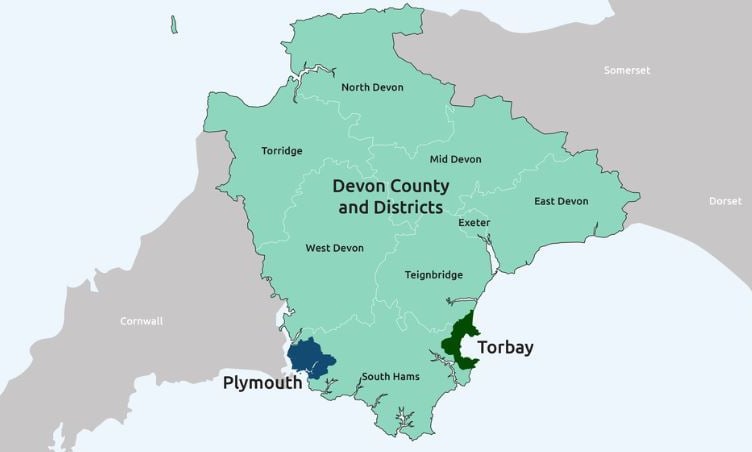
The authority’s preferred option is for a single, county-wide unitary council, alongside existing arrangements in Plymouth and Torbay, which it says would provide the scale and stability needed to protect frontline services and remain resilient to financial shocks.
By contrast, alternative proposals under consideration could see the county split into several smaller unitary councils. The council warns that such models risk creating organisations that lack the financial strength and operational capacity to deliver essential services.




Cllr Brazil has previously voiced serious concerns about the potential impact of reorganisation on vulnerable residents, particularly if existing social care and children’s services are broken up.
He also warned that poorly designed reorganisation could lead to reduced service quality, increased costs, and instability at a time when demand for social care and support services is already rising.
Councillor Brazil added: “We estimated the cost of restructuring Devon’s local authority structures to be between £50m and £80m, depending on which proposal the government selects.
“With no financial support for this huge task being offered from central government, this could impact our services to local people and there is not even any guarantee that the proposal selected by government will result in cost savings for the resulting councils or their residents.
“The government’s choice must be guided by what is sustainable financially, what protects vital services, and what is in the best interests of Devon’s communities — not by short-term or political considerations.
“We urge ministers to learn the lessons from Essex and to follow the clear advice of their own officials.”
The government is expected to make its decision on the future structure of local government in Devon within weeks.
Comments
This article has no comments yet. Be the first to leave a comment.