

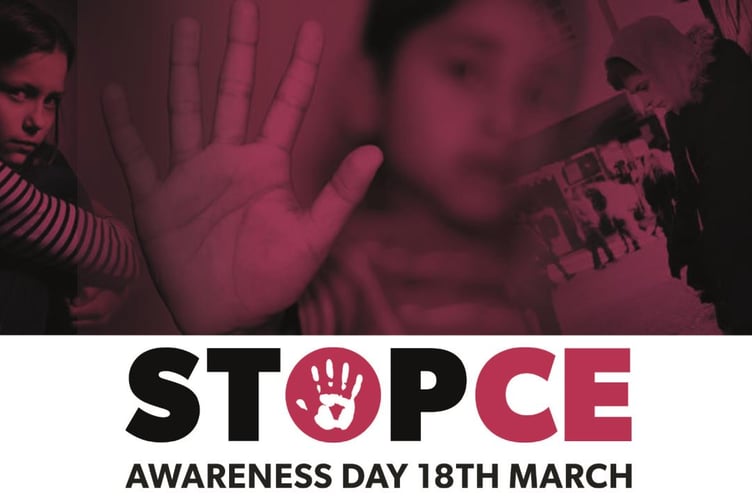
TODAY is National Child Exploitation Awareness Day which takes place on March 18 annually. The day highlights the issues surrounding child exploitation, encouraging everyone to think, spot and speak out against abuse and adopt a zero-tolerance to adults developing inappropriate relationships with children or children exploiting and abusing their peers.
There is extensive information about what constitutes the many forms of child exploitation and how to spot it - not just sexual but criminal exploitation too - plus case studies and ways to support the campaign on the NWG Network organisers' website here: https://stop-ce.org/
NWG Network has also produced a selection of posters which signpost reporting and further information. These can be downloaded from the website.
Detective Chief Inspector Jo Devonshire said: “Devon and Cornwall Police supports this day of awareness. Protecting vulnerable children who are being criminally exploited remains at the heart of our work.




“We ask that people trust their instincts and question what they see and hear and if they think a child is being exploited, to let us know so that we can protect the child and bring the criminal exploiters to justice. Parents, carers, and professionals for instance in the hotel or transport trades, can all be on the look out for the signs of exploitation.
“Any sudden or unexpected change in the lifestyle or behaviour of a child you know could be because of criminal exploitation, and there are behaviours in other children that you may see.”
Police and Crime Commissioner Alison Hernandez said: “We all have a duty to protect children from any form of exploitation and from the devastating impact it can have on their lives and those closest to them.
“I would urge not just parents but carers, professionals and neighbours to familiarise themselves with the signs of child exploitation so that we can try and safeguard vulnerable children when they need it the most, and to report any information to the police.”
Some of the indicators of exploitation are listed below, and you can find out more on the Devon and Cornwall Police website, where you can also report suspicions to the police
• displaying aggressive/violent behaviours
• often going missing from home or school and being found away from their normal area
• traveling alone or in adult company
• unexplained money, clothes, designer wear, jewellery, gadgets or mobile phones
• having multiple mobile phones
• getting lots of phone calls or texts
• use and/or possession of drugs and/or alcohol
• possession of hotel key cards/keys
• committing theft/shoplifting
• relationships with older people
• unexplained injuries
• carrying weapons
• abandoning friends and their social circle
• school performance getting worse
• self-harm
• changes in well-being
• significant emotional changes (like becoming angry or sad), or becoming fearful, withdrawn or isolated
• using different language/terminology
• new peer groups and/or relationships with unknown associates.
Anyone with information about or who has concerns about a vulnerable child should report it to the police.
You can do this online at https://www.devon-cornwall.police.uk/ or by using the non-emergency 101 number. You should always call 999 in an emergency.
Alternatively, you can pass information 100% anonymously to the independent charity Crimestoppers, 24 hours a day, 365 days of the year on 0800 555 111 or by using its untraceable online form here https://crimestoppers-uk.org/
Comments
This article has no comments yet. Be the first to leave a comment.