

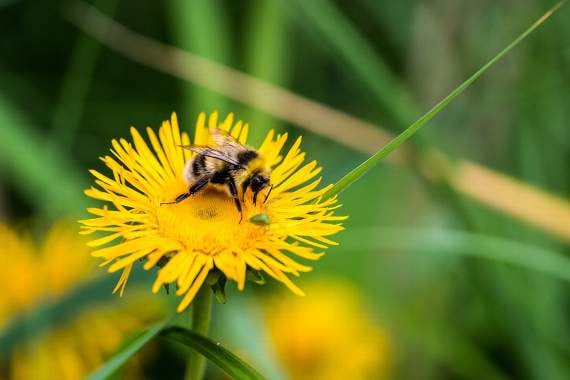
ACCORDING to a survey by Friends of the Earth and Buglife the South West are leading the way on protecting bees.
Habitat loss is a major contributor towards pollinator decline, and the guide includes easy, cost-effective measures to protect and restore pollinator-friendly habitats in their local areas.
One policy suggestion is reducing grass-cutting on road verges and areas in parks, and creating areas rich in wild-flowers. Dorset County Council saves around £93k a year by only cutting rural road verges when needed, allowing wildflowers and grasses to flower and set seed.




The introduction of local pollinator action plans is likely to prove popular with the public.
A YouGov poll for Friends of the Earth and Buglife, published last year, revealed that almost two thirds of the population (63 per cent) agreed that local councils should be doing more to protect Britain’s bees.
Friends of the Earth South West campaigner Sion Elis Williams said: “South West councils are leading the way on protecting our bees.
“Local authorities have a crucial role to play in protecting our pollinators – and we urge other councils in the region to take action too.
Councillor Roger Croad, Devon County Council’s Cabinet Member for Environmental Services said: "The pollinator’s action plan was formed to enshrine Devon County Council’s commitment to protecting pollinators through direct land management of the Council’s estate, as a local planning authority and as a strategic authority and to guide action across DCC’s services to support the conservation of bees and other pollinators.
“For instance we have a strict policy which ensures that weed control only takes place to prevent damage to infrastructure like drains and we do not use insecticides during these routine functions.
“However, it must also be recognised that for any strategy to truly be effective it must be a collective effort and we play a key role in encouraging and supporting organisations and communities and neighbouring councils through the Devon Local Nature Partnership, and encourage the public to take action through our ’Keep Devon Buzzing’ campaign.
“This has successfully encouraged communities and schools to create areas of wildflowers, build well designed bug hotels and take other positive steps to conserve pollinators across Devon.”
Comments
This article has no comments yet. Be the first to leave a comment.