

DEVON Beekeepers have set up Asian Hornet Action Teams (AHAT’s) throughout the County in an effort to help stem the incursion threat from the Asian hornet which has been sweeping through Europe since 2004 and most recently the Channel Islands.
Similar teams have been set up throughout the UK in an effort to deal with the threat of invasion.
AHAT’s across Devon responded to a "National Asian Hornet Watch Week", which ran from September 9 to 15, during which they encouraged members of the public to join in and be vigilant.
There have already been confirmed sightings of the Asian Hornet in the UK in several counties, and nests have subsequently been destroyed.




The first arrival in the UK was found in a tree in Tetbury, Gloucestershire, during 2016, and another was found at Woolacombe, North Devon, in 2017.
Recently there was a second sighting of an Asian hornet in Tamworth, Staffordshire.
The Asian hornet (Vespa velutina) is native to Asia.
It is believed that it was accidentally imported into Southern France from China around 2004 and has spread rapidly through France and into neighbouring countries.
Torbay AHAT spokesperson, Gerry Stuart, said: “This hornet originates from Central China and it is a threat to all pollinators not just honeybees.
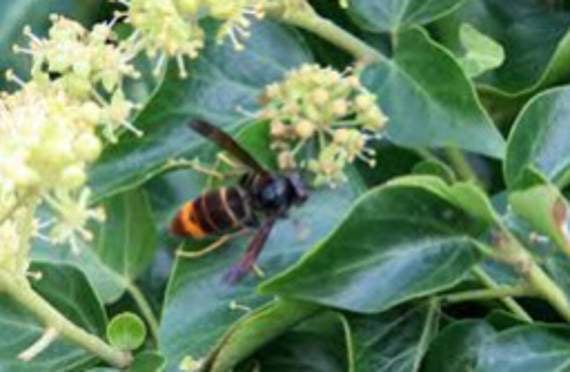
"It is slightly smaller than our native hornet, 25-30mm head to tail, with an orange face, a dark abdomen and a yellow fourth segment.
"Its thorax is entirely dark brown or black and velvety, and the insect has bright yellow tips to its legs. It doesn’t fly at night unlike our native European hornet which is reddish-brown in colour and much larger, and has a greater amount of yellow on its abdomen.
"We need to help thwart its establishment here in the UK.”
Colin Lodge, a member of Torbay beekeepers and the founder of the first AHAT team in Devon explained: “I suggested setting up teams of beekeepers who made themselves expert in dealing with Asian hornets because I was very concerned at the way the possible invasion of these insects was being managed.
"I realised beekeepers had to be encouraged to help protect their bees from this menace.
"Now I think it is equally important that we stop Asian hornets becoming established here because of the danger they pose to people, especially children and more vulnerable adults.
"Unlike the other wasp species these hornets are found building their nests in places where people can easily come into contact with them.
"The public should be aware that whilst the Asian hornets are not ordinarily aggressive, they are advised that they should not under any circumstances approach a nest. If the hornets are disturbed, they will actively defend their nests.”?AHAT members are encouraging members of the public to be on the alert for Asian hornets until the end of October. Ivy in flower over the next few weeks makes for an excellent place to look out for them, either in your garden or elsewhere.
Simon O’Sullivan, Chairman of Devon AHAT, said: “We have strived towards a ‘partnership approach’ with our Bee Inspectors from the National Bee Unit to assist them with this incursion.
"We really do need the public to be aware of this insect, what it looks like, and for them to understand the potential damage that this insect can cause to all of our native pollinators and this includes not just honey bees but butterflies, bumble bees, hoverflies and other essential pollinators.
"We really do need a proactive approach and for the public to assist us in dealing with this threat.”
AHAT members are asking the public to be attentive and to report any sightings.
The public is asked to report it to the Non-Native Species Secretariat (NNSS) at: http://www.nonnativespecies.org or alternatively contact your local beekeeping association swarm liaison co-ordinator or swarm collector.
If possible, take a photo or video and send it with the specimen (if it is dead) to the NNSS.
Comments
This article has no comments yet. Be the first to leave a comment.