

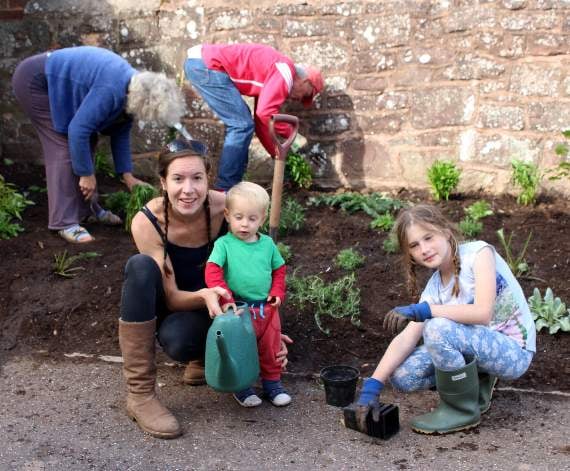
This involved re-planting an old rose bed with plants suitable for bees etc, on land owned by Mid Devon District Council along Belle Parade in the town, thanks to kind permission from MDDC and made possible as a result of a number of volunteers.
The town is located in a rural area where farming forms an important part of producing the crops we need, and the loss of pollinators would be devastating.
Crediton itself is a heavily built up town and in the next few years a considerable area of land will be taken up with urban extension from new housing, further degrading the habitats available in our area.


Dee Ross, Chair, Sustainable Crediton, explained: “We believe our project will assist our pollinators and hopefully start to reverse their decline by encouraging plots of unused land to be planted to help our pollinators, working with households (especially the new housing on its way), and local businesses.
“We are also working with the local councils including Crediton Town Council and MDDC who approved the use of the plot in Belle Parade, which has stood derelict for some years.
“Sustainable Crediton has been assisted in the project by Homeleigh Garden Centre, which kindly donated soil improver and shrubs and Natural Devon with a grant.
“One of our members, Simon O’Sullivan of Granny’s Meadow, designed the garden and grew or sourced much of the remaining planting.
“The garden is designed to provide year-round interest to residents and a long season for pollinators. The planting consists of shrubs, perennials, annuals and bulbs.”
Wild pollinators include bees, butterflies, moths, flies and various other insects such as beetles and wasps.
More than two thirds of Britain’s pollinators are in decline, including many species of bumblebee, butterfly and moth. Indeed, 35 of the UK’s bee species are currently under threat of extinction. Although they make the headlines most often, it is not just bees that are struggling: 76 per cent of UK butterfly species and 66 per cent of UK moth species are also in decline.”
Pollinators are said to be facing unprecedented challenges, including climate change, intensive farming, pests and diseases, pesticide use and urban growth.
They need food, water, shelter and nesting areas as well as the ability to roam far and wide - as they would naturally, without the barriers placed in their way as a result of urban sprawl. As the concrete jungle grows, their natural habitat inevitably shrinks.
Dramatic losses of wildflower-rich habitat and the fragmentation of the remaining protected spaces are some of the main threats to the survival of many pollinators. A significant further decline in their population would be a disaster for the UK: devastating for our farmers and our food sustainability. It would also have a huge impact on a wide range of businesses that rely on these insect-pollinated crops; our cider producers and food manufacturers, for example, would be hit hard.
Dee added: “We had a good turnout, which shows how much residents appreciate the work our bees and other pollinators do and we received many compliments from passersby.
“We are also grateful to households near the plot who have offered help in the form of the means to access a water supply as required. We hope later to put up a permanent explanatory sign in the plot.”
Comments
This article has no comments yet. Be the first to leave a comment.