

MID Devon District Council has given the green light to "green" gas in Crediton.
By a resounding nine votes to two, Mid Devon District Councillors, members of the planning committee at a meeting on Wednesday, June 5, decided to approve the plan for construction of an on-farm anaerobic digestion plant and associated infrastructure on land at NGR 285024 100245 (East of Lords Meadow Industrial Estate) Crediton, application reference 18/01800/MFUL.
The application was submitted by Graham Kerslake of Lords Meadow Biogas, who described the decision as a "landslide result" and the approval as "positive for Crediton".
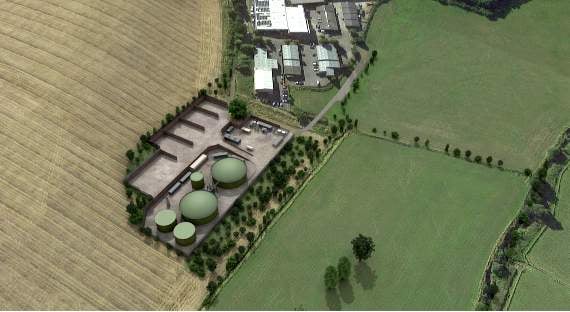
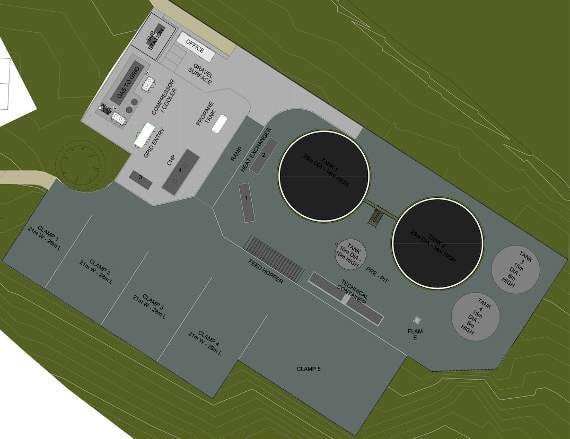
The full planning application includes construction of an anaerobic digestion plant comprising a digester and two large tanks, five storage areas, innovative pre and post treatment equipment and two smaller process tanks, provisions and vehicular access, infrastructure works, tree planting, landscaping and other associated works on land belonging to the Downes Estate at the end of Lords Meadow Industrial Estate, Crediton.




Mr Kerslake said that the £12.5 million plant will supply enough gas into the grid for 3,200 homes.
Mr Kerslake added that it would take about eight weeks to complete paperwork, after which he hoped that building work could start.
It would be operational in about July 2020.
Previously Mr Kerslake said that the advanced technology plant will be “super green”, adding that the process will be odourless, and there will be just an average of six deliveries of materials to fill the digester each day.
He said that there will be no traffic through Crediton High Street, with deliveries being made from adjacent farms and businesses using the Link Road and A3072 to access the site.
FEEDSTOCK
Mr Kerslake said that the bulk of the material to produce the energy will be from farming such as maize silage, grass silage, whole crop rye, chicken litter, whey, farm yard manure, waste grain, waste straw, waste vegetables, brewery waste, horse manure and apple pulp from a local cider firm.
He said that the tank in which the material is turned into power is airtight, meaning that no gasses will escape, making the production method odourless and silent.
He explained: “Using by-products of farming will be the main driver of this plant. We intend to produce 600 cubic meters per hour of renewable gas which will be injected directly into the Wales and West Utilities pipeline, which runs directly adjacent to the site.”
GREEN ENERGY
“The plan should appeal to anyone who is environmentally-minded and will see the benefits of using by-products to produce green energy” he went on to say, “not only will the facility produce renewable gas, it will also produce 6,000 tonnes of concentrated bio-fertiliser, which will be used by the farm to grow crops, this bio-fertiliser eliminates the need for the farm to buy in expensive, chemical fertilisers that in themselves use a huge amount of energy from fossil fuel sources to produce.
“We will also be planting about 150 trees to screen the site and to provide new ecological habitats.”
Mr Kerslake said that another facility using similar European technology, operates in Wales proving the technology.
He added that he expected the grass crop for the plant to come from fields in close proximity, possibly transported across farmland and not on highways. It is understood that the products will be transported by a mix of commercial vehicles and agricultural tractor and trailer’s to the site.
Three full-time staff will be employed.
Planning conditions include limits on tonnes of annual feedstock for the digester and that no storage of any feedstock can take place other than silage, which must be covered at all times when not being loaded into the facility.
Vehicles involved shall have no single or multi-use reversing bleepers but should use white noise alarms or reversing cameras.
Daytime noise limits should not exceed decibel level 39dB (LAeq1hr) between 7am and 11pm and evening between 7pm and 11pm the Maximum Instantanious Noise level should not exceed 55 db (LAFmax) at 3.5m from the facade of any noise sensitive premises.
Night-time noise level (11pm to 7am) should not when measured at 3.5 metres from the facade of any sensitive premises exceed 35dB (LAeq 15 min).
The Maximum Instantatious Noise Level shall not when measured at 3.5 metres from the facade of any noise sensitive premises exceed 55 db (LAFmax).
No traffic stipulations were put in place but conditions included colour and finish of the building materials used, drainage, run-off, odour reduction, screening and water pollution prevention.
MDDC said that the plan was not considered harmful to the environment, the landscape, neighbouring residents and the Heritage assets is not significant enough to warrant refusal of the application when balanced against the benefits.
Crediton Hamlets and Crediton Town Council both objected to the plan.
Crediton Town Council commented on visual impact, a negative impact from too much hardstanding in the valley and non-compliance with the emerging Crediton Neighbourhood Plan.
Crediton Hamlets expressed concerns about odour and dust, both which it said could affect local businesses reliant on clear air and nearby residential developments.
Traffic concerns were also raised.
Charles Mossman, energy group leader for Sustainable Crediton, backed the plan saying that the plan would not cause significant harm and that the benefits outweighed any limited harm that may be caused.
He said the development would also provide a soil improver as a by-product and consume around 20,000 tonnes of waste organic material annually.
• What do you think of the anaerobic digester plan for Crediton?
Share your views with fellow “Courier” readers. Write a letter to The Editorial Manager, “Crediton Courier”, 102 High Street, Crediton EX17 3LF or email your letter to: [email protected] .
Comments
This article has no comments yet. Be the first to leave a comment.