

MEMBERSHIP of Crediton and District Third Age Group, our local thriving group for the retired or semi-retired, costs £12 a year and we have “gone virtual” during these challenging times!
This month we had our first general meeting using Zoom.
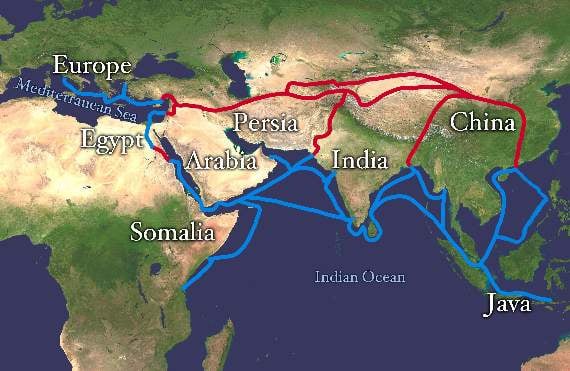
Our guest speaker was Ian Gasper talking about “The History of the Silk Road”.
A total of 62 devices (either computers or tablets) were successfully logged on at 10.30am in anticipation of the presentation.
This was quite an achievement (but we did have a practice run before for those less familiar with the delights of zooming).
It was lovely to see familiar faces on the screen, even though we were all muted in anticipation of Ian’s talk.
It was not quite the same experience as meeting monthly in the Boniface Centre but there were plusses as we could attend in our pyjamas, (if we wanted to!), didn’t have to travel and there were no chairs to be set out or put away!
Ian gave a very informative talk about the History of The Silk Road (which was in use from the Second Century BCE to the 18th Century CE) and he showed many wonderful images from his travels.
The Silk Road was a web of trading routes which spanned from China to Eastern Europe across many countries and allowed economic, educational, agricultural and metallurgical technology and cultural interaction between the regions.
Belief systems were also shared. Ian told us about the advanced knowledge of science and astronomy in that area of the world.
The architecture of the areas was stunning: so many colours and shapes. We were shown a wonderful image of a square surrounded by universities from the period.
The Chinese silk was extracted from the cocoons of silk worms fed on mulberry leaves. Silk is desirable as it is soft, cool in summer and warm during cold weather.
It can be woven into beautifully coloured and patterned bolts of cloth. These bolts were sometimes used instead of money as they were lighter to carry than precious metals.
As well as silk other commodities such as gold, ivory, pomegranates, jade, fur, horses, elephants, peacocks and sheep were traded.
Bactrian (two-humped) camels were the preferred mode of transport for the trading routes as they were very strong, could withstand changes in temperature and easily traverse the rough terrain.
Along the trading routes were found many Caravanserai - the hotels of the day. The particular example we were shown consisted of a large stone built building with running water running down the central aisle and rooms, for the traders, leading off this central passage through archways.
There were armed guards positioned at the two main entrances to ensure the safety of the traders and their wares.
Many thanks to Ian for an excellent talk! We are going to have another Zoom presentation next month and a quiz on another day - I’m not sure how we will be prevented from cheating or, as is more likely, we will need a lot of time to actually recall the answers!
Keep safe, healthy and look after all those who need support.
For more information please visit our website: U3asites.org.uk/crediton or telephone David Agasee (chair) on 01363 775698.
Jo Poulton
Comments
This article has no comments yet. Be the first to leave a comment.