
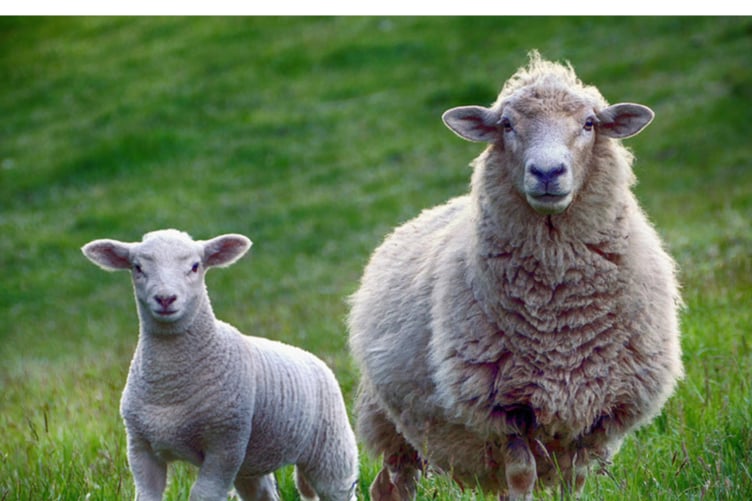
TORRIDGE councillors have agreed a £10,000 grant to help support farmers affected by devastating bluetongue outbreak amid calls across northern Devon for more government support.
Devon has now seen 1,269 cases of bluetongue BTV-3 (as of October 12) since July which is spread by biting midges and causes lameness and fever predominantly in sheep but also other livestock like cattle and goats. It can be fatal.
The West Country has been the hardest hit, with Devon the worst affected county by far with Cornwall and Somerset having the second and third highest number of cases, albeit much lower, being down in the 300s.
Both Torridge and North Devon Councils have written to the government asking for practical and financial support, compensation for farmers, testing capacity to increase and additional vaccines to be available.
At a meeting of Torridge District Council’s Community and Resources Committee, members agreed to give £10,000 to the Farming Community Network to support farmers and farming families after recent full council support for a motion by Cllr Nigel Kenneally (Lib Dem, Milton and Tamarside).
Cllr Jane Whittaker (Con, Northam) said the farming community was having a really rough time.
“£10,000 is a lot of money, this is a very lonely livelihood sometimes and any support for farming families cannot be argued against.”
Cllr Lyndon Piper (Lib Dem, Holsworthy) said it was “a bit of an unprecedented move” for the council to allocate this money and he would like to get some feedback on how it was being used.
The cash is coming from the council’s budget stabilisation reserve.
He was concerned that it was “a drop in the ocean” and that the struggles in farming would continue.




Meanwhile a letter by North Devon Council’s scrutiny and policy development committee to Dame Angela Eagle MP, secretary of state for environment, food and rural affairs, has outlined the pressures the virus has placed on farmers.
Livestock deaths, veterinary costs and the cost of disposing of fallen stock had caused further financial strain on affected businesses, it said.
A local fallen stock collector reported that collections of dead animals were running at five to six times the normal level for late summer.
The committee has also raised concerns about the response to the outbreak, including lengthy waits for disease testing, difficulties accessing vaccines, and difficulty reporting suspected cases and recording vaccinated animals with the ministry.
It warns of factoring in the costs of longer-term consequences of the outbreak, including the potential effects on fertility and breeding.
It is asking for the cost of future vaccine supplies to be underwritten and compensation for those who have faced significant livestock losses.
The committee is also calling on the government to take action to strengthen its response to any future outbreaks, with disease testing facilities to be properly funded and able to respond effectively to outbreaks, for a simple and accessible reporting system to be introduced, and for information and guidance from Animal and Plant Health Agency (APHA) and Defra to be accurate, up to date and support faster testing.
Committee chair Cllr Becky Coombs (Lib Dem, Instow) said: “Farming is at the heart of North Devon and our farmers play an essential role in producing our food, caring for our countryside and supporting our local economy. We want to see them given the practical support they need to recover from this outbreak and become more resilient to future disease threats.
“This outbreak has placed yet another significant pressure on farming businesses that are already facing extremely challenging circumstances. We have heard about the devastating loss of livestock as well as the considerable additional costs farmers are having to meet.
“We want the government to recognise the scale of the impact and learn lessons from this outbreak. Farmers need confidence that vaccines will be available when they are needed, that testing can be carried out promptly and that the systems they are expected to use are straightforward and effective.”
In September the government said it was speeding up the fight against bluetongue with new measures for private vets to diagnose bluetongue after examining affected animals rather than waiting for samples to be sent away and tested.
A new online system had been introduced which would also make it easier and quicker for vets to report cases directly to APHA, helping speed up confirmation and reduce delays for farmers.
Farmers could also apply for government funded vet visits giving them expert advice to help them protect their livestock, it said.
Comments
We've recently changed our login process. If you have an account for commenting, you will need to re-register on the login window.
This article has no comments yet. Be the first to leave a comment.