

AS most rugby followers in the South West and, in particular Devon, bask in the reflected glory of being home to the Champions of England and Europe, it is worth a mention that the game as we know it today is a mere 25 years old. Indeed, that Exeter Chiefs have achieved that status in a mere 10 years is all the more remarkable.
Of course, it is difficult to say where the game would be had there not been the division of minds 125 years ago when the Northern Union went their own way.
The split was the culmination of years of unrest and disillusionment with the Rugby Football Union, and whilst it may seem to have been a North/South division, that was not necessarily the case. It was more a Class issue and the way the RFU viewed what were then known as “broken time” payments to players.
In those days the Victorian era of the 1890’s, rugby was regarded as very much a middle class sport and the ethos of amateurism was sacrosanct. Players were permitted to claim for expenses incurred such as for travel, meals and accommodation but that was about it.




If rugby was to survive outside of London and the Home Counties, it was thought imperative that players were recruited and consequently, Clubs looked to the “blue collar” workers as the source of new blood.
A classic example was found in Devon with the Devon Albion Club which became one of the finest clubs in England.
They had a huge recruiting base at Devonport Dockyard and many an international found employment there!
The problem arose when players lost pay when they were playing. Inevitably, Clubs were overcoming the problem with what became commonly known as the brown envelope in the boot, a fairly self explanatory phrase!
The general view taken by Clubs, not just those in the North but elsewhere in the country was such that if a player lost pay because he was playing, he could be taken to a restaurant for a meal but not compensated for loss of earnings.
The argument was that the player would be better served if he received the broken time payment as opposed to being taken for a meal.
There were a number of grievances held by the Northern Clubs, in particular the imbalance in the representation on the RFU Council, which weighted towards the South. A proposition from Northern Clubs that players should be compensated up to six shillings per day for loss of earnings was heavily defeated.
Things came to a head when the RFU suspended a number of Clubs in Yorkshire for “professionalism”, a decision that brought about the historic meeting at The George Hotel, Huddersfield on August 29, 1895.
Attended by 22 Clubs from Lancashire, Yorkshire and Cheshire and the momentous decision to break from the RFU was made and what became commonly known as the Northern Union was born. Their initial proposal was to reduce the number in a team from 15 to 13 and to use the same ball as in association football.
Crediton would have been one of the few Clubs where a player was suspended for “professionalism” with the case of William Harvey back in 1889.
The last game of the 1887-88 season was played against Exeter Wanderers and unfortunately, Harvey broke his collar bone.
The injury meant that he lost his job and of course, with no NHS, medical expenses were costly.
The following season opened with a repeat of the game against Exeter Wanderers in order to raise funds for Harvey; a total of £2 12s 6d was raised.
The Devon RFU intervened but could not make a decision on whether the payment contravened any regulations and passed the matter on to the RFU who, in their wisdom, decided the regulations were broken and as a consequence, Harvey was suspended. Fortunately, the suspension ended just a couple of weeks after he was fit to play again!
There was of course some irony in the timing of the decision by the International Rugby Board to allow the professional game to begin in 1995.
The Board Meeting was held just one day short of 100 years after the Northern Union decision. No-one could accuse the Union Administrators of being 100 years behind the League!
Whilst the strides made by the professional game in England during the last 25 years have been enormous and of course with Exeter in the last 10 years even more so, the game at the grassroots level is fast becoming the forgotten (or even worse, the ignored) area of the game.
Nonetheless, we play an important role in the structure of English rugby, indeed a role that grassroots Clubs are never credited with.
Whilst Premiership Clubs tend to go overboard about their Academies and get paid handsomely by the RFU to run them, the players that enter these Academies in their hundreds all start somewhere else, yes at local rugby clubs, the clubs that invest heavily in junior rugby and take great pride in seeing their junior players playing in the Premiership or even for England.
We do not necessarily look for financial reward, although in these times some would be helpful, but simply the recognition that all junior grassroots clubs deserve.
Academies do not breed players, junior clubs do that for them. However, the lower level clubs should have a far better representation on the RFU, decisions are being made at the top which have a direct and adverse effect on every Club outside of the Premiership.
PHILIP GIBBINGS
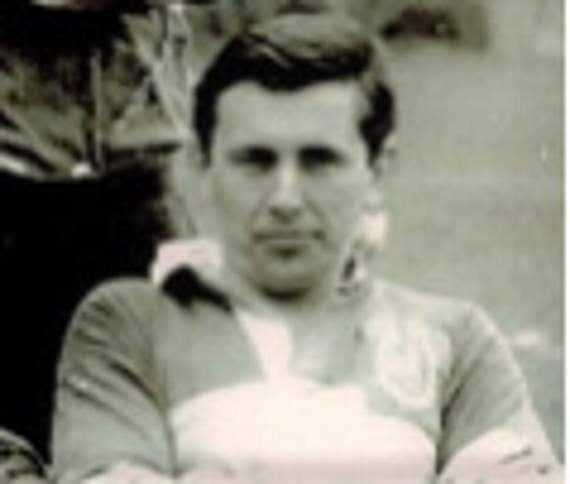
Club members will be saddened to learn of the death of Philip Gibbings who passed away last week at the age of 85.
“Gibbo” as he was affectionately known had been a tremendous servant of the Club as a player and administrator. He was a jovial character and always a good tourist.
His playing days began in the Colts in the late 1950’s and continued until the late 1970’s, he even squeezed a Second team game in during the 1979-80 season.
In total Philip played 282 games for the Club, 112 in the First XV and 141 in the Quins. He was happy to play anywhere from back row to fullback and any position in between!
A very competent place kicker, he amassed a total of 282 points from tries and kicks. Philip served on the Committee for many years including 12 years as Club Secretary from 1985-1997, a job he did so efficiently.
Paul Harris
Comments
This article has no comments yet. Be the first to leave a comment.