
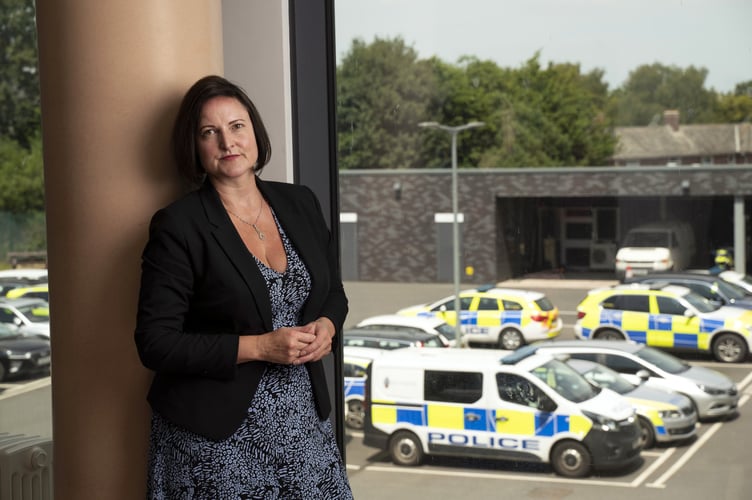
I’M really proud to be sharing the news that Prisoners Building Homes has won Programme of the Year at the UK Civil Service Awards.
This is a huge achievement and a moment worth celebrating, not just for the team behind the programme, but for everyone who believes that rehabilitation, skills and opportunity can genuinely change lives.
What makes this even more special for me is that Prisoners Building Homes began right here in Devon and Cornwall, led by my office.
It grew out of local ambition and a willingness to think differently about how we stop people reoffending upon release from prison.


It’s the best thing we can do for victims because whether we like it or not, multiple governments have allowed the early release of prisoners and a lack of investment in prison expansion.
When we started this scheme, the reoffending rate after prison release was around 50 per cent and prisons were on the verge of being full.
What started as a regional idea has now become a nationally recognised programme, proving that innovation in the South West can influence change right across the country.
Prisoners Building Homes, or PBH as it’s more widely known, started with a simple but powerful idea: that people in prison can be part of the solution to some of the biggest challenges we face.
By training serving prisoners and supporting them into work on release, the programme helps tackle the construction skills shortage while also delivering high-quality, affordable and low-energy homes on difficult public-sector sites that might otherwise be left unused.
Giving people the chance to gain real qualifications, real experience and real jobs is not about being soft on crime, it’s about being smart on crime and focusing on what actually works.
I believe committing crime should result in punishment, but also in giving people a second chance and the last thing we want is for people to leave prison and go back to creating more victims.
My national role allows me to champion approaches like PBH across England and Wales, sharing best practice and pushing for solutions that reduce reoffending, cut crime and ultimately protect the public.
What makes PBH stand out is the way it brings partners together. It also reflects the dedication of the people delivering the work on the ground every day, often in challenging circumstances, and the participants themselves who choose to grasp the opportunity in front of them.
The results speak for themselves. Participants gain nationally recognised construction qualifications and practical experience in modern methods of construction that employers genuinely value.
Around 89 per cent of those completing the programme move straight into employment on release, compared with a national average of around 19 per cent.
Reoffending rates among PBH participants are below five per cent, far lower than the national picture. Those numbers aren’t just statistics; they represent fewer victims, safer communities and better outcomes for everyone.
My role in criminal justice is about prevention as much as enforcement. I want fewer crimes, fewer victims and fewer people stuck in a cycle of reoffending.
Comments
This article has no comments yet. Be the first to leave a comment.