

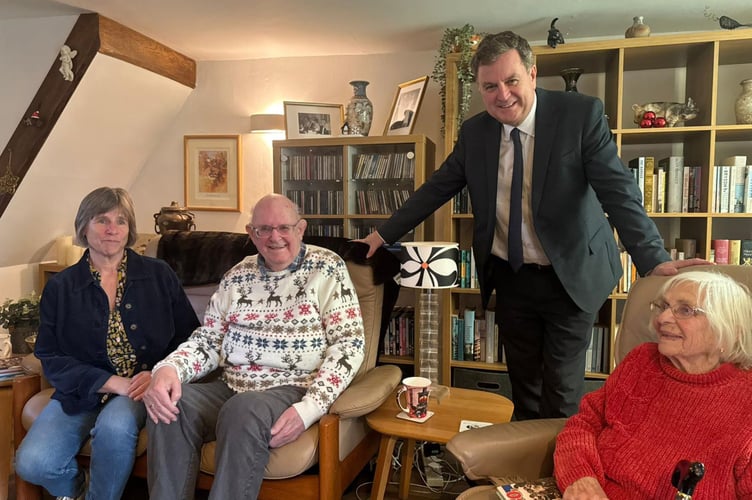
VISITING The Filo Project in Sticklepath near Okehampton recently, reminded me just how powerful community-based care can be.
The small-group setting, the familiar faces and the genuine warmth I saw there are exactly what many people living with dementia need but too often struggle to find.
Libby, Julia, Stephen, David and Anne gave me a wonderful welcome and, more importantly, showed what real dedication to others looks like in practice.
Across the UK, nearly one million people are now estimated to be living with dementia, a number projected to rise to around 1.4 million by 2040 as our population ages.

At the same time dementia has become the leading cause of death in the UK and yet more than a third of those affected are still thought to be without a formal diagnosis.
That means thousands of families coping with worry and confusion without the clarity and support that should come with getting a proper diagnosis.
The economic impact is staggering. Dementia is estimated to be costing the UK around £42 billion a year, a figure forecast to rise to £90 billion by 2040 if we do not get a grip on prevention, early diagnosis and better support.
Most of that cost does not fall on the state but on families, who shoulder the majority of the financial burden and countless unpaid caring hours.
Too often it is a son or daughter cutting back their own working hours, or leaving work altogether, to look after a loved one.
Against this backdrop, services like The Filo Project are not a “nice to have”, they are essential. The model of small-group day care in local homes helps people living with dementia retain independence, offers vital respite to carers and relieves pressure on the NHS and social care.
I saw first hand how conversation, reminiscence and shared activities can transform a day for someone who may otherwise be isolated and anxious.
Yet the national picture is still far from where it needs to be. Although the NHS in England has now recorded over half a million people with a formal dementia diagnosis, diagnosis rates remain stubbornly below the level the health service itself regards as acceptable.
There has been a lot of talk from the current government about prioritising dementia but progress on a fully resourced national dementia strategy, on speeding up access to diagnosis and on expanding community support has been far too slow.
Families in Central Devon and across the country are entitled to more than warm words.
They need clear pathways to diagnosis, properly funded social care, and consistent support that does not depend on where they happen to live.
I will continue to press hard on these issues in Parliament, working with organisations like The Filo Project and the Alzheimer’s Society, to make sure that dementia care moves up the agenda and stays there.
This is one of the defining health and social care challenges of our time. It deserves a response that matches the courage and love shown every day by carers and those living with dementia.
Comments
This article has no comments yet. Be the first to leave a comment.