
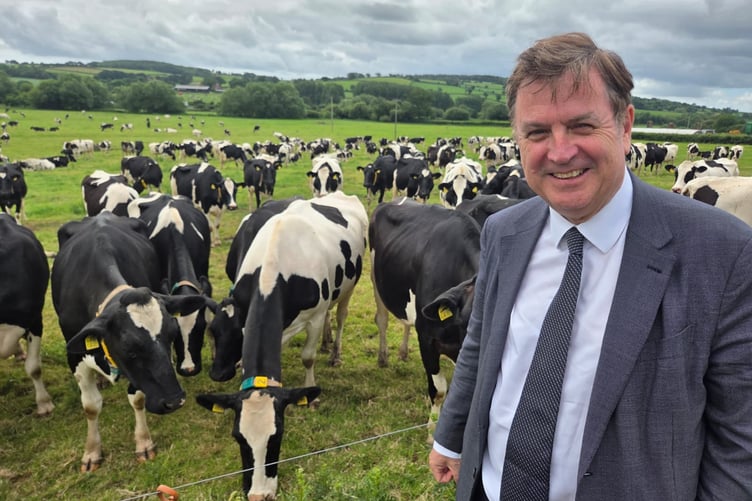
IT was a real pleasure to spend time recently at Park Farm near Bradninch, where I met representatives from Müller alongside local dairy farmer Mark Persey.
Visits like this remind me just how much skill and sheer hard work goes into producing the milk that ends up on our breakfast tables every morning.
Central Devon sits at the heart of one of the most important dairy regions in the country.
The South West is home to roughly a quarter of the UK’s dairy cows and produces close to a quarter of all British milk, with Devon alone accounting for more than a billion litres in a typical year.
Behind those figures are family farms, often passed down through several generations, quietly getting on with the job of feeding the nation.
Nationally, the picture is one of extraordinary productivity combined with real pressure.
British farmers produced a record 13 billion litres of milk in the 2025/26 season, and the dairy sector contributes more than £6 billion to the UK economy each year, accounting for around a fifth of our total agricultural output.
Milk is now the single most valuable product of British farming, worth £7 billion at farmgate prices in 2025.
Yet the number of dairy producers continues to shrink. There are now around 7,000 dairy farms left in Great Britain, down roughly 20 per cent since 2019.
Farmgate milk prices have fallen sharply since last autumn, with some farmers seeing cuts of up to 15 pence per litre. Add in an ageing workforce, with almost half of farmers now aged 55 or over, and the challenge for the next generation becomes clear.
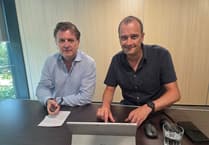
That is why the conversation at Park Farm was so valuable. We talked about the future of British dairy and how processors and farmers can work together to keep milk moving from field to fridge.
The UK is almost entirely self-sufficient in liquid milk, but we still import large quantities of cheese, butter and yoghurt. Closing that gap would benefit farmers, consumers and the wider rural economy.
Food security and economic growth are increasingly two sides of the same coin. A country that cannot feed itself is a country that is exposed, and businesses like Müller, working hand in hand with farms like Mark’s, are exactly the kind of partnership that keeps British food on British plates.
I came away from Bradninch reassured that the expertise and commitment are there in abundance.
What our dairy farmers need now is stability, fair prices and a bit of confidence about the years ahead.
I will keep doing everything I can in Parliament to speak up for the men and women who work with such pride on our farms, in all weathers, so that the rest of us can carry on with our lives.
When Devon’s farms thrive, the whole country benefits, and I am proud to represent a constituency where so many of them still do.
Facebook: Mel Stride MP X: @MelJStride Instagram: @melstridemp Website: www.melstridemp.com
Comments
We've recently changed our login process. If you have an account for commenting, you will need to re-register on the login window.
This article has no comments yet. Be the first to leave a comment.