

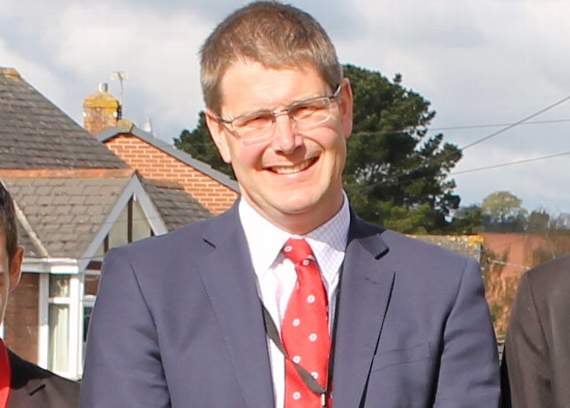
RUPERT Poole, the principal at Crediton’s Queen Elizabeth’s School, says that a lot of changes have already been put in place to address concerns raised in a recent Ofsted (Office for Standards in Education) which says that in many areas, the school “requires improvement”.
These included: 1 Overall effectiveness; 2 Effectiveness of leadership and management; 3 Quality of teaching, learning and assessment; 4 Personal development, behaviour and welfare; 5 Outcomes for pupils; 6 Overall experiences and progress of children and young people in the boarding provision; 7 How well children and young people are helped and protected in the boarding provision; 8 The effectiveness of leaders and managers in the boarding provision.
The Inspectors said that study programmes for 16 to 19-year-olds was good, adding that the overall effectiveness at the previous inspection was also recorded as good.
Eight Inspectors carried out the inspection at the 1,358-pupil school on June 13 and 14 and their report was published this week.
.jpeg?width=209&height=140&crop=209:145,smart&quality=75)

KEY FINDINGS
They said, in a summary of the key findings for parents and pupils:
“This is a school that requires improvement” and listed the following:
• The overall effectiveness of the school and the boarding provision has declined since the previous inspection. Until recently, senior leaders have been too slow to react to the underperformance of key groups of pupils.• Senior leaders’ oversight of procedures to keep pupils safe is not as rigorous in the boarding provision as it is in the main school.• Although disadvantaged pupils’ progress in English and mathematics is in line with that of other pupils nationally, these pupils do not make sufficient progress in other subjects.• Pupils who have special educational needs (SEN) and/or disabilities do not make sufficient progress from their starting points.• Teaching does not help the least able pupils to develop their literacy skills and so these pupils make less progress than others across a range of subjects.• Pupils’ behaviour requires improvement because a minority of pupils do not concentrate well in lessons. Staff in the school and the boarding provision do not use the school’s behaviour policy robustly.
Pupils’ rate of attendance is too low. Too many pupils are persistently absent from school.
• Some pupils do not take pride in their work. This results in poorly presented or incomplete written work, particularly for boys.
• Senior leaders do not evaluate the impact of the school’s use of pupil premium funding in enough detail.
• Middle leaders have not secured consistently good teaching in their departments. Ineffective teaching has not been tackled quickly enough.
• In the past, governors have not challenged senior leaders effectively over the performance of the school.
• Many parents believe the school does not communicate effectively with them and does not take sufficient note of their views.
SCHOOL STRENGTHS
However, the Inspectors said that the school has the following strengths:
• The leadership of teaching has become more effective in the past year. Teachers are being given a clear vision for the future.
• Students in the sixth form on academic programmes make strong progress from their starting points.
• The curriculum offers pupils an appropriate range of academic and vocational options.
• The governing body has improved its ability to hold senior leaders to account.
• Boarders have positive experiences; they make new friends and many develop their language skills well.
The Inspectors added that the school must take action to meet the requirements of the national minimum standards for boarding schools and associated requirements and gave a detailed report including suggestions of areas where change must happen and made a number of recommendations.
WHERE TO IMPROVE
The Inspectors said that to improve further the school needs to:
• Improve the quality of teaching and raise pupils’ achievements by:
– ensuring that teachers use effective strategies to boost the progress of disadvantaged pupils across a wide range of subjects– providing training for teachers so they have a better understanding of how to support pupils who have SEN and/or disabilities
– planning learning activities that meet the needs of the least able pupils, particularly in developing their literacy skills– making sure that teachers apply the school’s behaviour policy consistently for all pupils.
• Improve pupils’ personal development, behaviour and welfare by:– reducing disruption in lessons by ensuring that teaching engages and motivates pupils– urgently improving the rate of pupils’ attendance and reducing the proportion of pupils who are persistently absent from school– making sure that, through consistently high-quality teaching, pupils’ attitudes to school improve.
• Improve leadership and management by:– improving the quality of communication between the school and parents– sharpening senior leaders’ analysis of the impact of their use of additional funding for disadvantaged pupils– improving middle leaders’ monitoring, support and challenge of the staff in their departments– continuing with reforms to the governance structure to consolidate the improvements that have already been made.
• Improve the leadership and management of the boarding provision by:– ensuring that formal records are kept of supervision discussions with boarding staff– developing the use of risk assessments to improve their quality and effectiveness.
BOARDING
Queen Elizabeth’s School has provision for 48 boarders, but the Inspectors said that the boarding provision required improvement in all areas, commenting on many weaknesses and shortfalls.
With regard to Safeguarding, the Inspectors said some incidents regarding child protection issues with regard to boarding provision were not afforded the same rigour as the rest of the school.
They said that the weaker approach to managing these specific interests has hindered senior leaders’ ability to ensure that the child protection and staff performance policies are consistently implemented.
Inspectors said aspects of health and safety in the boarding provision requires improvement, adding that fire drills do not take place regularly enough and medication is not always stored securely.
They added that boarders’ individual risk assessments require improvement and not all risks are formally assessed.
The report said: “Some risk assessments do not have clear strategies to mitigate and manage the risk. Staff do not always take appropriate action to ensure that they know the whereabouts of boarders when they are away from the provision and when they have returned.”
TEACHINGThe report states: “Teaching requires improvement because it is not consistently good across the school.
“Teachers’ expectations of what pupils are capable of are not high enough and so many pupils, especially boys, do not take enough pride in their work. As a result, pupils’ progress is slow, particularly in science and languages.“Staff do not apply the school’s behaviour policy consistently. Pupils who are not ready to learn are sometimes not dealt with effectively. Other pupils find it frustrating when they see inconsistent application of the rules.“Senior leaders have ensured that teachers are aware of those pupils who might need extra help. For example, teachers understand senior leaders’ expectations of the strategies they should use to support disadvantaged pupils. However, these strategies have not yet made sufficient difference to the progress of this group of pupils.”PERSONAL DEVELOPMENT
The Inspectors said the school’s work to promote pupils’ personal development and welfare requires improvement.They said: “While most pupils have a generally positive attitude to learning, some do not take enough pride in their work. These pupils, often boys, produce work of a lower standard than they are capable of.“Pupils are self-confident and generally self-assured. They speak out readily on issues they care about and make valid contributions to discussions in lessons. Pupils willingly offered inspectors their opinions about the school.“The majority of parents who responded to the Parent View survey believe that incidents of bullying are dealt with well by the school. Pupils believe incidents of bullying are not common, but when they do happen, they say that teachers take them seriously and act quickly to intervene.“Senior leaders have introduced a new personal development programme into the curriculum. This programme provides effective guidance for pupils about their health and emotional needs.”
BEHAVIOUR
The report said:
• The behaviour of pupils requires improvement.• A minority of pupils do not concentrate well in lessons and this leads to interruptions that hinder pupils’ progress. The new behaviour policy, introduced by senior leaders this year, has brought some improvement. However, the policy is only partially effective because some staff do not apply it consistently.• The rate of pupils’ attendance is below the national average. Senior leaders have reacted positively and put in place a number of strategies to try to improve it. The proportion of pupils, particularly disadvantaged pupils, who are persistently absent from school is too high. Senior leaders and governors recognise this as a key improvement priority for the school and for the boarding provision.• The conduct of pupils at the two school sites is variable. Pupils’ behaviour around the Barnfield site at break-time and lunchtime is respectful and calm. The Western Road site generally has an orderly, positive atmosphere. However, a small number of pupils on this site lack self-discipline, and this sometimes leads to poor behaviour at lunchtime.• Most pupils are polite and well-mannered. Inspectors saw many examples of courtesy between pupils around both sites during the inspection. Pupils value the help of their teachers.• The number of pupils excluded from school was well above average last year but has fallen this year and is now below the national average.• The majority of staff who responded to the online Ofsted survey believe that pupils’ behaviour is at least good. Even so, a significant minority feel that behaviour is not managed consistently.
OUTCOMES FOR PUPILS
Another area which requires improvement was the achievements of pupils.
Inspectors said pupils’ progress measured across eight GCSE subjects was below average in 2017.
They said most pupils make good progress in English and mathematics, but they are not as successful in a wide range of other subjects.They added that disadvantaged pupils match the progress of other pupils nationally in English and mathematics, but they are not supported sufficiently across the curriculum and so fall behind in other subject areas.Also, that pupils who have SEN and/or disabilities do not make the progress they could be expected to in mainstream lessons because the support they receive has not been effective enough.Sixth form provision was praised as was leadership of the sixth form and quality of sixth form teaching.
PLEASED QUALITIES RECOGNISED
Principal Rupert Poole, said in response to the report: “The team of very experienced inspectors engaged constructively with us and confirmed our self-evaluation of the areas where improvement is needed.
“We are pleased Ofsted recognised many of the qualities of the school, in particular the comments about the strength of teaching in the best areas, where the inspectors noted that teachers provide clear explanations of ideas and help pupils make rapid progress.
“Our English and maths results are recognised for their strength, and we are pleased that the report recognised the incredibly strong progress and outcomes our students make in the 6th Form.
“We take our Safeguarding responsibilities very seriously, and as in all inspections this aspect of the school’s work was looked at closely. Inspectors noted that we deal with safeguarding matters effectively. Importantly, students know who to go to if they are worried about any aspect of their well-being.
“We are very pleased that the large majority of parents told Ofsted that their child enjoys school, is kept safe and is well looked after.
COMMITTED
“As a school we are also committed to providing a rich and broad range of extra-curricular activities and this really does help make QE unique, it was good therefore that the inspectors made a point of commenting on this despite their incredibly busy schedule over the three days with us, noting the wide variety of extra-curricular activities that students engage in.
“The report confirmed the areas for improvement we had identified in our own self-evaluation and the inspectors saw evidence of the actions we have already taken to address them. We are determined to implement these changes rapidly and deliver the improvements in the areas required.
“Prior to the inspection, we had announced some significant changes to our boarding provision, these will take effect in September and they address the points raised in the report.
COMMUNICATION
“There are two areas in the report where we particularly need the support of parents and carers; one is student attendance and the other is helping us to improve the quality of communication between home and school. I welcome feedback on this vital aspect of our work and we will be arranging forums in the new academic year to address this.
“Quite rightly the inspectors commented on the polite and well-mannered nature of QE students and they saw many examples of courtesy between pupils around both campuses during the inspection.
“We are confident that the changes we have been making, and will continue to make, will bring about the improvements required. We are determined that the young people of Crediton and the surrounding villages have the very best education here at QE.”
Mr Poole has written, jointly, with the Chair of Governors, Keith Baker, to all parents and carers of pupils at the school about the report, highlighting some of the good and not-so-good issues it contains.
He said that while the school overall was described as “Requiring Improvement”, he said: “This means that overall we provide an acceptable standard of education but we are not judged good in all areas using the Ofsted inspection criteria.”
He added: “The report also recognises that we have already taken action in several key areas to improve outcomes for our young people and we are determined to see these through and deliver the improvements required.”
He appealed for the support of parents and carers to help with student attendance and help to improve the quality of communication between the school and parents.
Comments
This article has no comments yet. Be the first to leave a comment.