

THE Department for Culture, Media and Sport issued a statement on December 27, explaining that more than 3.5 million homes and businesses have now been reached by the Government’s nationwide rollout of superfast broadband.
It says thanks to the work already completed by the Government’s broadband delivery arm (BDUK) and the commercial sector, almost nine out of 10 UK homes and businesses now have access to superfast speeds.
It adds that the rollout – the fastest one of its kind anywhere in the world - is currently expected to pass the four million milestone in Spring 2016.
Local district councillor, Mrs Judi Binks (Sandford and Creedy) has issued a rebuttal to the claim and is now calling the rollout of broadband to the rest of the rural community.
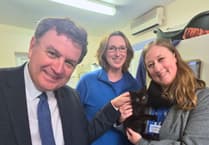
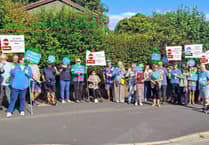
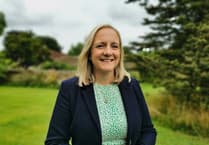

She explained: “My job as a local councillor is to make sure residents in my ward get the same chances to take part in the digital economy as urban dwellers. We want results - not warm words.
“We need to optimise existing rural businesses so they can retain their global and national significance whilst attracting the best and brightest people and outside investment in a pristine and beautiful environment. Because of unobtrusive infrastructure of optical fibre technology we can reap the benefits of the modern global economy and keep our local heritage. Everyone’s a Winner!
“We pay the same fees for broadband services regardless of service and speed, yet on the whole, we have a poor and patchy service with only residents living within one km of the cabinets in Sandford, Morchard Bishop and Thelbridge receiving high speeds. The rest struggle on with speeds ranging from 0.5 to five MBps in areas without mobile signal and villages like Black Dog, Puddington and Washford Pyne don’t feature in next phase of the rollout.
“We must look for alternative solutions for our hard to reach rural settlements where a surprisingly high number of economically active residents - as many as 35 per cent - rely on consistent and reliable upload and download speeds in their home or farm-based enterprises. Our recent Community Broadband Needs Survey showed that even more business possibilities to boost the local economy would be created if we had faster, symmetrical speeds.
“The modern digital rural economy is not just about building shops, factories and roads: it’s about putting in place a decent network of optical fibre to support tele-working from home in high value information and technical services such as financial services, education, leisure and tourism as well as farming. This is how we can future-proof our rural communities to attract investment and provide jobs for our young people, whilst protecting our beautiful villages and countryside.
“We should also be asking how can we help existing profitable businesses in rural areas become more profitable simply by ensuring that optical fibre network capable of reaching all premises is installed now?
“Oodles of public money has been granted to achieve this target, yet Devon and Somerset are the last counties in England to even get to Phase 2 of the Superfast rollout.
“For example, instead of handing the contract to one sole agency like BT, who will pick the low hanging fruit first, we should obtain tenders from several firms offering small-scale, tailor-made solutions to hard to reach settlements. I have already been in contact with Gigaclear and Airband to see if they can enable faster broadband to residents in Puddington, Woolsery and Washford Pyne.
“Mel Stride has conveyed my concerns to Kerri Denton the Head of Connecting Devon and Somerset (CDS) and he is exploring other initiatives, too. A short-term solution for those with speeds under 2MBps is the £350 satellite voucher scheme which is yet to reach Devon, although I have been assured it is on its way.”
Judi added: “The ultimate solution is for communities to actually sort it out themselves as they are doing in rural Lancashire through the B4RNS model where individuals and farmers are digging the trenches, negotiating wayleaves and blowing the fibre through the pipes from parish to parish. All properties are included and speeds routinely reach 1,000 Mbps. (My usual speed is under 1Mbps and no mobile signal). During the recent floods, their digital connectivity continued when other services failed.
“I have passed on to CDS all the comments from my Petitions and the Community Broadband Survey to show them how people feel disadvantaged being left out in the digital darkness. Matt Barrow of CDS assured me that this is precisely the sort of information they need to share with companies tendering for the Phase Two contract.
“I welcome you all to a Public Meeting on Broadband on Wednesday, January 20, at Black Dog Memorial Hall, at 7.30pm, for all interested local parishes and residents in Mid Devon to hear the results of our recent survey and listen to other options as well as having the chance to ask questions of Matt Barrow of CDS and Laurent Boon of BT, together with Mel Stride’s parliamentary spokesperson.
“Please contact me by email at: [email protected] for further details.”
Alan Quick
Comments
This article has no comments yet. Be the first to leave a comment.