
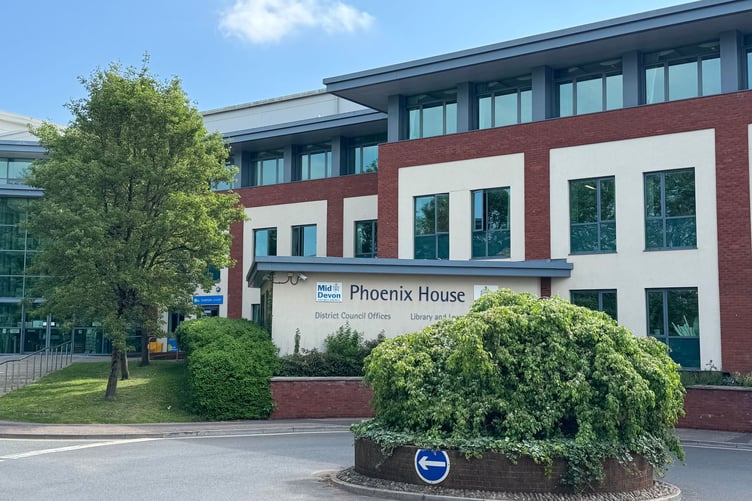
FEWER planning applications, a reliance on agency staff and fewer people paying for garden waste collections have contributed to a Devon council’s prediction it could overspend by nearly £1 million this year.
Decisionmakers heard how lower levels of income from some areas – such as planning – and overspends in some departments due to spending on agency staff had led officers to suggest budgets could be exceeded this year.
Devon councils have been under pressure after reductions in government funding and rising costs squeezing finances.
Mid Devon District Council’s cabinet heard that its finance experts had predicted an overspend of £956,000 for this financial year, which ends in April.
The council has saved money from keeping vacancies unfilled, but in some departments, such as legal, waste, and planning, it has needed to cover some longer term vacancies with agency staff.
Permanent staff costs are more than £430,000 lower than it had predicted for the year when it set its budget, but the cost of agency staff has negatively impacted that saving.
“The cost of the agency staff more than offsets the corresponding general fund service’s staffing underspends by £229,000,” the council’s cabinet was told.
“The most significant is within waste services due to covering increased vacancies and sickness absence compared to previous years, plus additional collections required arising from the growth in housing.”
While housing numbers have grown in Mid Devon, the pace of that growth has caused an issue for the council, with income from its “major fee income streams” – which includes planning – is nearly £200,000 lower for the current financial year than it had hoped.
The cabinet heard there was a “broad lack of confidence in the housing market”, alongside the “higher cost of borrowing” and delays in major schemes locally, meant the income it received from planning applications had fallen.



Councillors heard there were “efforts being made to either reduce costs or delay spending to help bring the budget back in line with target”.
A trio of possible actions were suggested, which included considering an increase in fees and charges ahead of the normal April reset.
It added that a freeze in recruitment could be implemented, which would be tailored to specific services and roles, for example a month’s delay in some service areas, or non-replacement in others.
And a review of the use of reserves was also suggested as a possibility.
“This should be limited to offsetting one-off expenditure,” the cabinet heard.
“Additional funding could be drawn down, or an alternative would be to not continue with the planned contributions to reserves where affordable not to, for example into maintenance reserves which hold a reasonable balance already.”
The council said that if reserves were used to plug the entire predicted overspend, though, that it would decrease the general reserve balance to just over £1.1m, “below the agreed £2m balance”.
“This position will be reviewed at year-end where we reflect on levels of reserves and the significant loss of central government core funding,” the cabinet heard.
Comments
We've recently changed our login process. If you have an account for commenting, you will need to re-register on the login window.
This article has no comments yet. Be the first to leave a comment.