

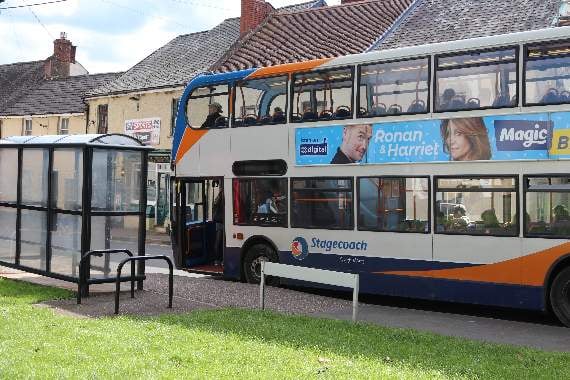
PASSENGERS are making hundreds of thousands more journeys than in 2009-10 on Devon’s buses, figures from the Department for Transport show.
But across the country, fewer bus journeys are being made, as campaigners say that unreliable service and rising fares are making an impact.
The data shows that passengers in Devon took a combined 26.2 million bus journeys in 2016-17 - 620,000 more than in 2009-10, when the figures were first recorded.
And Devon followed the trend for the South West as a whole, with nine per cent more journeys made across the region.

.jpeg?width=209&height=140&crop=209:145,smart&quality=75)


Across England, the number of bus journeys taken decreased by four per cent, with large drops across the north and the Midlands outweighing an increase in usage in the south.
Dawn Badminton, the England director of Bus Users UK, said that local authority funding cuts have led to many subsidised routes being stopped.
She said: "Local authorities have had to take some really tough decisions.
"Withdrawing that money means that we have lost services, usually in areas where ridership is not high, such as in rural communities. I don’t think we will ever get back to the levels of service we have had previously."
The figures also show that between 2009 and 2017, the average bus fare in England - excluding London, where public transport follows a different model - increased by 34 per cent.
During the same period, the cost to bus companies of running bus services increased by 15 per cent for every journey, but the revenue earned increased by just eight per cent.
The average number of journeys taken by each person in Devon remained level, at 34 between 2009-10 and 2016-17.
The number of concessionary journeys taken by elderly and disabled passengers meanwhile decreased by 13 per cent.
Ms Badminton said that the poor reliability of some services has led to people choosing to run a car, rather than rely on public transport.
She said: "It affects everyone, from a young person trying to get to school and meet up with his mates, to adults going to work and more elderly passengers getting to their doctor on time.
"We know of some communities that have been practically cut off. They try and support people through community transport, but that can’t always offer the same coverage."
Comments
This article has no comments yet. Be the first to leave a comment.