

AT the recent meeting of Thorverton and District Historical Society, Mark Baker gave a talk about the Grand Western Canal at Tiverton.
In the mid 1700’s canals were seen as a good form of transport, although later the railways took over much of the trade.
The GW canal was part of an ambitious scheme to link the Bristol Channel with the English Channel. This would avoid ships taking the much longer and more dangerous route around the Cornish peninsula.
It was also an ideal route for transporting coal from South Wales into the heart of Devon and Somerset. Rivers would have linked canals to make up the intended route.


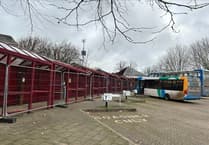

Construction was started in Tiverton and the section to the limestone quarries at Westleigh was completed in 1814.
However, the costs had escalated due to the use of steep embankments and deep cuttings needed to keep the canal on a level contour and avoid building locks.
This overspend delayed construction of the next section to Taunton which was completed by 1838.
By this time the plan to link the canal with the English Channel had been abandoned but for a short time the canal was profitable, mainly by carrying coal and limestone (this was burnt in limekilns and used for improving agricultural land).
Tiverton wharf was a busy limestone kiln burning area and the remains of the kilns can still be seen.
The work on the canal was very hard and one horse would be used to pull three barges.
The advent of the railways took trade away from the canals although the limestone trade continued until 1925 when persistent leaks led to the damming off of a section near Halberton.
Over the years the canal slowly choked up with reeds and was largely abandoned until the 1960’s. There were plans to use the canal as a landfill site and possible route for a road but there was local support to maintain the canal.
In 1971 Devon County Council took ownership of the canal and declared it a country park and it is now a thriving local amenity.
The reeds were cleared from the canal, it was dredged and leaky areas were relined. Dredging needs to be done periodically and the sludge is good for the local farmland.
Water for the canal mainly comes from springs at the north end but this is reducing due to the quarrying at Westleigh.
In 2012 the canal was breached following torrential overnight rain, far worse than forecast. Despite all their efforts the water overflowed and breached the canal embankment. Luckily no one was hurt and no properties were damaged.
The local angling club managed to save about 80 per cent of large fish but many small fish died.
Repair work was carried out the following year and the canal re-opened in 2014. The canal now runs from Tiverton to Lowdells – just over 11 miles and is well worth a visit.
RECENT FINDS IN THORVERTON
Following the talk we were treated to a short talk by Jim who is a metal detectorist and is the man who discovered the Pinhoe Hoarde. His French-made detector can find metal down to a depth of about 14 inches.
He is only allowed to do his detection work with the permission of the land owner and his club was given permission to check the field above the millennium green after the corn had been harvested.
At one time there was a summer house at the top of the field but there is no other evidence of buildings or occupation on the site.
Their finds included a pendulum from a large clock, a solid silver spoon with the Exeter hallmark and a George Third coin. There were several musket balls and Jim told us these turn up at most sites they work on.
They also found weights, buckles, buttons and part of a watch but the most exciting find was a gold ring. This is engraved with the initials CH and the date 20.07.1741 (a Thursday).
They checked the parish records but there were no marriages recorded on that date.
However, if the bride came from another parish it is likely any marriage would have taken place in her home parish.
Robert Turner
Comments
This article has no comments yet. Be the first to leave a comment.