

EXETER’S elections will now go ahead in May in spite of them being postponed just a month ago.
The shock U-turn comes as the government has written to the High Court to “withdraw the decision to postpone council elections in 30 local councils due to take place in May 2026 in the light of recent legal advice”.
It appears that the government must have had some pushback on the decision to allow certain councils in England to postpone their elections, and when it stress-tested its stance, must have felt it lacked vigour.
“The Secretary of State (Steve Reed) invited the housing minister, who was not involved in the initial decision-making, to reconsider the position afresh on a very urgent basis recognising the pressing timescales involved,” a letter from Mr Reed to council leaders stated.




“The housing minister has decided that the elections should proceed in May 2026.”
The letter then states the Secretary of State will “agree to pay the claimant’s costs” of the proceedings.

The reversal of the decision will ignite ferocious campaigning in Exeter City Council’s elections given the criticism levelled at the controlling Labour administration for deciding to ask the government to postpone the city’s elections.
The council’s leader, Councillor Phil Bialyk (Labour, Exwick) had argued that the quarter of a million pounds cost of the elections would be better spent preparing for local government reorganisation.
That is the process – currently underway – that will rid Devon of its two-tier system whereby the county council and eight underlying districts carry out different services within the same administrative boundary.
Westminster wants areas like Devon to have fewer, larger councils that are unitary – like Plymouth and Torbay – so that one council is in charge of all services under one roof.
But the letter says a total of £63 million will be given to the 21 councils out of the 30 that are undergoing local government reorganisation, cash which presumably can be used to help support those town halls amid the forthcoming poll.
In Exeter, 13 of its 39 seats are up for re-election.
The last time these seats were up for election was in 2022, and Labour won nine of those seats.
Changes since then mean it is defending eight of those seats this time, which, if it lost all of them, would take its current total of 22 down to 14. If those eight seats all went to the Greens – the next biggest party – they would rise from seven seats to 15.

That would be just more than Labour, but an even closer outcome could leave the council with no overall control.
However, given local government reorganisation, it is likely that elections for a shadow authority will take place in 2027 ahead of a new unitary council being launched in 2028, meaning those elected this year will have a shorter term than the usual four-year stint unless they gain a seat on any new council.
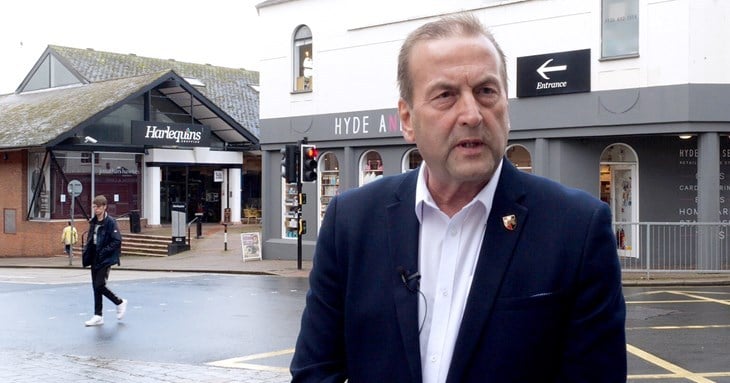
David Reed MP, the Conservative member for Exmouth and Exeter East, said the initial decision to postpone the elections had “sparked significant concern locally”, with many voters contacting his office to say they were angry about losing their chance to vote.
“This is the right outcome,” Mr Reed said.
“Local people should never have their vote taken away, and I’m pleased that voters in Exeter will now get their say at the ballot box.
“I challenged ministers repeatedly to reverse this decision and allow these elections to go ahead, and I’m glad they have listened.
“The people of Exeter will now have the opportunity to vote, which is exactly how our democracy should work.”
Mr Reed also paid tribute to those who contacted his office during the period of uncertainty: “This is a victory for everyone who wrote in, signed petitions, and spoke up,” he added.
“The strength of feeling across Exeter was clear. People care deeply about their democratic rights, and they were right to demand answers.”
Bradley Gerrard
LDRS
Comments
We've recently changed our login process. If you have an account for commenting, you will need to re-register on the login window.
This article has no comments yet. Be the first to leave a comment.