
MANAGING money can test the most prudent of households, but the stakes are much higher when you’re helping oversee spending decisions that could impact hundreds of thousands of people.
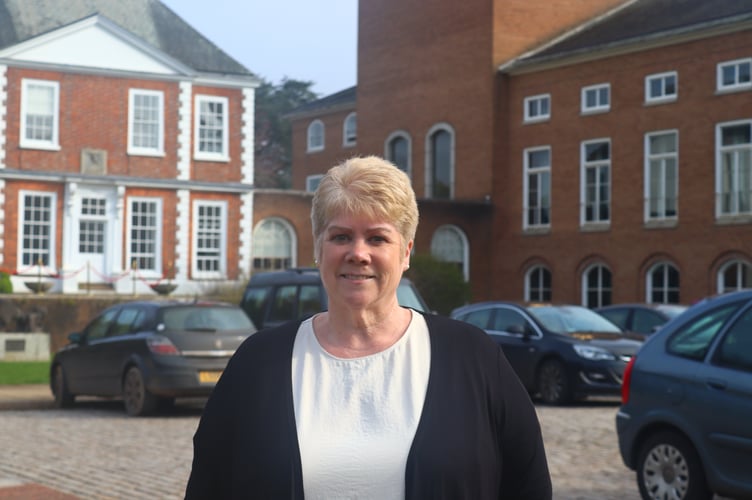
Devon County Council Director of Finance Angie Sinclair has spent her entire career involved in council finances, but as her retirement nears, the job hasn’t got any less tumultuous.
“It’s definitely chaotic,” she says, remarking on the up-against-the-wire approach the government has increasingly taken to announce how much money it would be giving councils like Devon.
Local authorities have been begging ministers to declare grant levels much earlier in the budget-setting process to give them more time to work out how much they can spend and where.




The government did grant one wish this time by outlining its council funding plans for the next three years rather than just for the next 12 months, but it only confirmed the figures at the very last minute.
“The initial settlement was just a few days before Christmas, with the final settlement later in the year than ever.”
Councils are bound by a statutory deadline of February 28 to ratify their budgets, so with Whitehall only confirming figures this year on the 9th of that month, it made Ms Sinclair’s penultimate month of work more frantic than she’d hoped.
While she remembers that those on the receiving end of Westminster’s council funding decisions have nearly always said there is “not enough”, she believes the pressures now are much greater.
Indeed, government funding for the forthcoming financial year will be broadly flat when council tax is excluded, but cuts of nearly £7 million are expected in each of the following two years.
“Looking back, we didn’t know we were born,” she says.
“When I started here 18 years ago and we were pulling the budget together, the conversations were all about bidding into a pot of money to expand services, not about savings.”
That drastically changed shortly after Ms Sinclair joined the county council in 2007, with austerity kicking in soon after the 2008/09 global financial crisis.
“Wow that was tough,” Ms Sinclair remarks.
“In some of those years we were having to find £40 million to £50 million in savings every year.”
Ongoing cuts from central government mean the amount of money councils have has “significantly reduced” during Ms Sinclair’s career, even as demand has continued to rise.
And for a rural county like Devon, there have been more recent blows too.
“We’re definitely misunderstood,” Ms Sinclair states.
“The government’s policy now is that it wants to refocus funding on urban areas with high levels of deprivation, but if there are winners then there have to be losers too.
“We have pockets of deprivation here but they don’t rate in the way urban ones do.”
She recalls the “shock” when Devon lost a £10 million rural services grant in December 2024, money aimed at supporting rural counties due to the extra expense of delivering services compared to their urban peers.
Comments
This article has no comments yet. Be the first to leave a comment.