


by Alan Quick
COUNCILLORS in Devon are planning a council tax rise of nearly five per cent to fund a big boost in spending on the elderly, the vulnerable and the county’s roads.
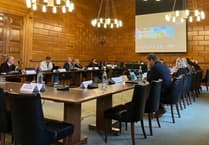
The ruling Cabinet, on Friday, February 9, agreed to recommend a 4.99 per cent council tax increase, which was due to be discussed at the council’s full budget meeting yesterday, Thursday, February 15.
That will comprise a 1.99 per cent rise for general services, two per cent for adult social care and one per cent dedicated to drainage, patching and potholes on the county’s roads.



The increase will add £63.27 to the average Band D bill or more than £1.20 a week.
But it will mean more money for hard-pressed adult care and health, services for vulnerable children and vital road maintenance.
The budget provides an extra £13 million for adult care and health. That is a rise of more than six per cent and will take the total care budget to £227.8 million.
In addition the Government has announced an extra £2.2 million to support adult social care in Devon.
There will also be an increase in spending for children’s services of 5.5 per cent or £6.5 million taking the total budget for children to £125.5 million.
Councillors are also now being recommended to accept the Government’s offer of an extra one per cent rise in council tax to spend on dedicated highways work.
In addition, Ministers last week increased Devon’s share of the Rural Services Delivery Grant by £1.5 million which will also be spent on roads.
So now an additional £6.5 million is being proposed for patching, drainage, potholes and other road maintenance work.
In all, the target revenue budget for the county for 2018/19 will be £477.391 million.
County Treasurer Mary Davis told councillors, even with these increases, the budget would be hard to deliver against rapidly rising demand for services.
“Innovative work with partner authorities will be needed to manage demand for social care,” she said.
“And a new approach to service delivery and commissioning will be required to try to ensure the needs of the young and vulnerable are met.”
Council Leader John Hart said: “Our vital health and social care services for adults continue to be under immense pressure both in Devon and nationally.
“In Devon we have some of the highest proportions of people over 65 and people over 85 in the country and they need and deserve our help and support.
“We also believe it is imperative to do the best we can for our children and young people to give them the best possible start in life. We have always said our priority is to protect the most vulnerable in our society and I believe this target budget will help to do that.
“But demand for these services continues to grow at a relentless pace.
“That’s why the leaders of all the political parties on the county council have this week taken the unprecedented step of joining together to plead with the Government for more funding for adult social care and children’s services. And we are delighted that the Government has recognised our case with the extra money for adult social care and the rural delivery grant.
“That will go some way to easing the pressures but a long-term solution to the issues in health and social care still needs to be found.
“Before Christmas, when I had a series of consultation meetings on the budget, I was left in no doubt that the condition of our roads was a number one priority for many residents. This year we have re-negotiated a number of contracts and made considerable efficiency savings. We’re also working smarter and greener, for example installing LED lightbulbs in our street lighting.
“But many people want us to spend more on our roads and that’s why I want to take up the Government’s unexpected offer of an extra one per cent on the council tax to be dedicated to our highways.
“We are very conscious that many people living in Devon are on fixed and low incomes. But this is likely to be a one-off increase and it will mean an extra £12.68 a year for the average Band D council taxpayer. We’ve had a very wet winter and it will mean we can really get to grips with many of the problems on our roads.”
LIB DEM ALTERNATIVE BUDGET
More money for young people’s mental health, children with special needs and Devon’s schools is at the core of the alternative budget launched by the county’s Liberal Democrats.
Funding to protect schools, mental health care and children with special educational needs has been found by cutting waste, ending duplication and cracking down on expensive consultants and stand-in managers.
Planned cuts to mental health services for young people will be stopped and £223,000 given back for care and treatment.
An extra £500,000 is also earmarked for services supporting children with special educational needs.
The highly controversial cut of £2.2 million imposed by County Hall Conservatives on schools across the county will be reversed.
The extra £6.5 million announced for road repairs and highways drainage announced by Devon County Council last Friday is welcomed by Devon Liberal Democrats, who have been campaigning for the extra investment.
Cllr Alan Connett, Lib Dem opposition leader at County Hall, said: "Across Devon, people are concerned about the state of our roads, the potholes, schools and services for vulnerable young people.
"We welcome the extra money planned for some services, but you can’t hide the fact that cuts are planned by the Conservatives which can be avoided.
"By cutting waste and duplication, we have found savings that could be used to keep important services that benefit our communities. It’s about making better use of what we already have."
The Lib Dems say Devon County Council is spending more than £1 million a year on expensive consultants and stand-in managers. The Lib Dems, who uncovered the spending, plan to cut the budget to a quarter and use the £750,000 saved to help protect key services.
The axe will also fall on Conservative spending plans for nearly £2 million on press public relations and advertising, more on hiring meeting rooms, and ending the yearly car allowance of up to £453 for staff driving less than 10 miles a week for the council.
In a bold move, the council’s Economic Development service would be radically changed, freeing up £899,000 with more partnership working planned with local district and borough councils and Exeter City Council.
Cllr Connett explained: “There is so much duplication in economic development activity. Local councils are working hard and investing in this area. Our view is that Devon can work differently and support our local councils.”
Further savings of £150,000 would also be taken from the council’s planning function.
LABOUR PARTY PROPOSALS
Prevention and Resilience are the two key themes at the heart of the Devon Labour Groups Alternative Budget for the 2018 County Budget meeting.
The County Council has been chosen to be a pilot authority for a Business Rate Retention Scheme. It is estimated that this will bring in £16.6 million to the council.
The recommendation is that £5 million will be put into reserves as a Business Rates Risk Reserves, leaving £11.6 million currently unallocated.
In order to help address current service pressures, deal with issues that have come up through scrutiny, find more cost effective ways of working, innovate, and generally assist with the smooth running of the county councils services, the Labour Group has aligned these with two key areas.
Cllr Rob Hannaford, Labour Group Leader adds: “After many long hard years of cuts and service reductions this new pilot scheme, gives us a golden opportunity to help ease austerity for communities and local people across Devon, whilst still putting some funds aside for risk management, and keeping some in the account for future projects.
“Working with staff and listening to officers, analysing scrutiny and cabinet papers, and taking advice, we have carefully crafted a range of sensible and positive amendments to the councils budget. These will help improve our prevention work, and strengthen our collective resilience to meet future challenges and pressures. Some areas that we have covered, are held jointly with other key partners, but for the greater good we must not just retreat behind our statutory responsibilities, and so risk gaps in service provision.
“ In terms of prevention work, we know that this is not only better for individuals personally, it’s also a more cost effective way to operate. It’s widely recognised that we need to improve our early help offer at the county council, so that’s a crucial priority for us. A recent cross party scrutiny report, adopted by the councils cabinet, has highlighted that we need to enhance our social workers professional development, and get their caseloads down, so that needs a budget line.
“The evidence shows that Devon sadly has a high number of suicides - so we need to tackle this much better. Furthermore we need to develop a robust Teenage Risk Pathway, to deal with serious issues such as Child Sexual Exploitation, and the County Lines problem, amongst others. Children and Young People are still waiting far too long to access mental health support in Devon, and this must be addressed urgently.
“In terms of Domestic Abuse and Sexual Violence, we are still not doing enough work with perpetrators to change their behaviour, and more must be done to care for and support children and young people affected by this serious problem. Lastly Public Health in Devon is already very underfunded, and is facing yet more cuts, it’s a key area of our corporate reach, and we are very concerned, that without extra funding, key pieces of work, such as sexual health, HIV services, and drug and substance abuse, will worsen for many vulnerable people.”
Mr Hannaford added: “In terms of resilience, we want to invest more in our local Citizens Advice services, especially as there have been a raft of deep cuts and massive changes to benefits for disabled people, and those with serious and terminal illnesses. In addition to these, there are still huge concerns about the roll out and possible negative effects of Universal Credit.
“The county council has commissioned a report to progress the Healthy New Towns initiative, for places such as Cranbrook, to help with community cohesion and neighbourhood building, so we now need to fund its proper and effective roll out.
“The counties Children’s Centres are being recommissioned, and some services will cease, having a development fund will proactively help local communities to come forward and set up volunteer and charity provision in some areas. Overall we must do more to support Special Educational Needs people into more employment, with a skills uplift and recruitment campaign, to promote their independence.
“Locality budgets help individual ward councillors to be local champions and community leaders, with more funding this work can be grown and built upon from the grass roots. Lastly, with the collapse of Carillion we need to take a fresh new look at bringing some services back in house as a better way forward, and also look at new innovative models of care.”
Comments
This article has no comments yet. Be the first to leave a comment.