

LATELY we've watched the thermometer break its own record, then break it again a few weeks later.
Britain's hottest May day on record was set at the end of May then broken again the next day. We’ve now broken the June record too. Across Europe, millions of people have been affected and thousands of lives lost to the heat.
Beyond Europe, persistent drought and unpredictable rains in east Africa are pushing millions toward crisis-level hunger.
In many places families are watching their herds collapse after yet another failed rainy season.
We’re all under the same changing sky but it wears different faces: too much heat in one place, not enough water in another, both traceable to the same warming world. The people least responsible for it, as ever, pay the steepest price.
Scientists, generally not given to drama, are using words like "virtually impossible" to describe what's happened this year.
It isn't just a hot summer, or a hard season in the Horn of Africa – it’s indication that "normal" isn't coming back. This can be disorienting.
Most of us order our lives around the assumption that certain things hold steady – the seasons, the reliability of the soil beneath us. When that assumption cracks, I wonder if something does in us too.
C.S. Lewis, in the Narnia stories, wrote of a "deeper magic" that was older and truer than the surface rules of the world. It held even when the visible order seemed to be breaking apart.
Lewis used it to stand in for ideas of Jesus’s resurrection – of life overcoming death. In the book the deeper magic provided a rescue, but I also see it as something stabilising.



It might not be a power that immediately fixes the climate, but it says that there are truths that persist despite brokenness and which we can still choose to navigate by.
Truths like how love isn't conditional on the world holding still. How life persists (anyone who's watched a hedge grow back thicker after a brutal cut knows death precedes greening).
How we belong to a far longer story than headlines, and that many times in human history we have had to stand in ruins and still decide to plant and tend and remember our humanity.
The stability of deeper magic, of the resurrection, of life persisting despite death or brokenness, are still available to us even when – maybe especially when – the world shifts.
None of this is a solution to a warming world. But it might help us navigate a rapidly changed and changing world without either denial or despair.
Despair assumes we know how things end. But there is a deeper magic that might keep us steady enough to grieve what is becoming lost to us whilst empowering us to still act in a way that recognises our choices, however small, matter.
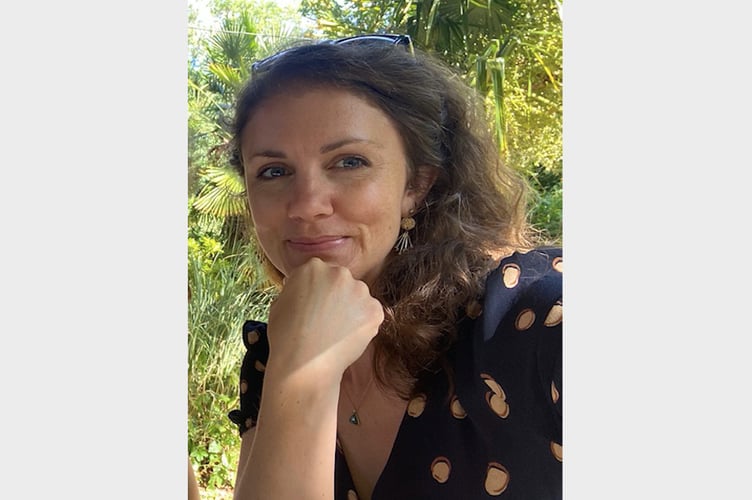
Elizabeth Lloyd
Crediton Congregational Church
Comments
This article has no comments yet. Be the first to leave a comment.