


THE recent meeting of Thorverton History Society began with the AGM.
Barrie Phillips stood down as chairman after six years and Richard Pocock was elected as our new chairman.
After the AGM we had two talks from society members.
Firstly, Dr Graham Wills gave an update on the Thorverton Historic Buildings project.
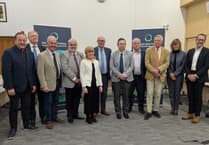


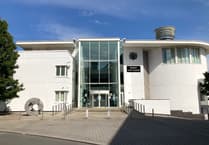
One of the aims of the society is to encourage members to research local history and property. We are looking to increase an interest in, and an understanding of the history of the village and we are planning to put together an up-to-date guide book.
This will include maps and photographs of old Thorverton and will allow the reader to take a walk around the village and gain an understanding of its development. How did fires shape the village? What shops or businesses were here in the past?
As part of the process, training will be given to help residents access and record local history eg, the 1939 Register and how to record history from local people.
At the moment we have identified 47 buildings that are of interest to us. It is important that we get people involved and we are looking to contact the owners of properties to see what information they might have and would share with us.
We would be very happy to receive information from anyone who feels their property might be of interest to us – please contact either Graham Wills or Robert Turner.
Our second speaker was Dr Mike Stannard who gave a talk on Richard Ford, an English travel writer, artist and authority on Spain.
He lived from 1796 to 1858 and for many years in Heavitree in Exeter.
His book “Travellers in Spain” was started in 1840, took three years to write and looked at Spanish culture.
The book was a widespread commercial success and W G Hoskins described him as a literary genius.
Ford married Harriet Capel but his wife’s illness forced them to move in the South of Spain in 1830.
At the time this area was completely unknown to British travellers and the country was in chaos.
He went to Granada and ignored all those who told him he would be murdered by bandits. Ford loved the country and explored extensively recording everything in a sketch book.
In the three years he was there he travelled all over the country. He enjoyed hunting with the locals and seeing street characters. Both he and his wife were very talented artists and they produced beautiful drawings.
The death of two of his children led his wife to want to return to London. They did return but the marriage broke up and he moved to Exeter as his brother lived locally. He purchased a small farm house and 11 acres in Church Road, Heavitree, Exeter. He had the gardens and house remodelled in a Spanish style. Ford died in 1858 and is buried in Heavitree graveyard.
His headstone was vandalised but replaced by his family. Heavitree House passed to his son on his death and was sold in 1898. By the 1950’s the property was becoming derelict and was demolished in 1960.
Mike grew up living in Church Street, Heavitree only a short distance from the house where Richard Ford lived.
Our next talk on February 22 is on the debtors prisons of 18th century England by Dr Tawny Paul.
Admission is £3 for non members or join the society for £10 for the year. All talks are held in the WI hut starting at 7.30pm. Talks are listed in “Focus”, the parish magazine.
Robert Turner
Comments
This article has no comments yet. Be the first to leave a comment.