

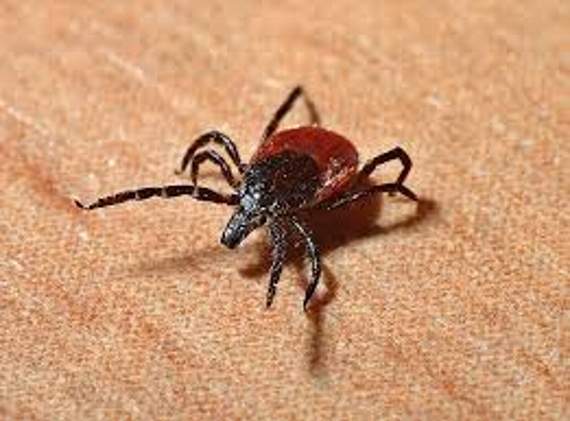
AS the weather warms up, Devon County Council’s public health team is stepping up its advice for people to be “tick aware” as they get out and about in the countryside.
The advice comes during Tick Bite Prevention Week (March 24-30) – a UK public health and awareness campaign to inform the public about the different ways to prevent tick bites.
Tick bites can be a serious problem and in many cases can be harmful causing infections that can lead to serious health problems. Around 3,000 people each year are affected by Lyme disease in the UK.
Ticks are found in moist areas of dense vegetation or long grass in woodland, grassland, moorland, heathland and some urban parks and gardens.



They can be found throughout the year, but are most active between spring and autumn.
Public Health England’s advice to minimise the risk of being bitten by an infected tick, is to:
• Wear appropriate clothing (a long sleeved shirt and long trousers tucked into socks). Light coloured fabrics are useful, as it is easier to see ticks against a light background
• Consider using insect repellents, such as DEET-containing preparations
• Inspect skin frequently and remove any attached ticks. Ticks can be very small, look for something as tiny as a freckle, or a speck of dirt
• At the end of the day, check again thoroughly for ticks, especially in skin folds
• Make sure that children’s head and neck areas, including scalps, are properly checked
• A shower or bath after returning from a tick-infested area helps to reduce risk
• Check that ticks are not brought home on clothes
• Check that pets do not bring ticks into the home on their fur.
Comments
This article has no comments yet. Be the first to leave a comment.