

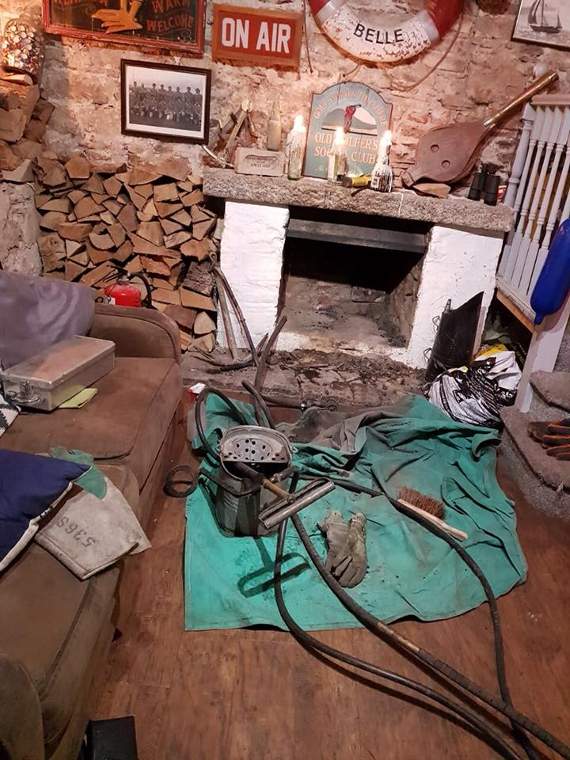
EVEN though the sun is still shining autumn will soon be here, bringing the cooler weather. This time of year is the perfect time to check your chimney is clean, safe and has been swept by a registered chimney sweep.
Chimney fires in England accounted for more than 4,200 incidents dealt with by fire and rescue services between April 2016 and March 2017.
As part of this year’s Chimney Fire Safety Week (September 3-9), Devon and Somerset Fire and Rescue Service is asking people to get their chimneys swept by an approved sweep to prevent chimney damage and in worse cases, household fires.
Chimneys need to be dirt free to allow the free passage of dangerous combustion gasses, so regular cleaning removes soot and creosote, and will help prevent dangerous chimney fires.



Chimney fires can cause serious structural damage to a home, with the risks being even greater if the property has a thatched roof.
The damage is not only fire-based but also the dirt and smell left from all the soot and smoke, which would affect personal property.
Alan Gilson, Community Safety Prevention Manager explains: “All chimneys and flues need to be regularly cleaned and checked to ensure they’re free from debris and in full working order. A blocked or defective chimney can cause both chimney fires and carbon monoxide poisonings.
“If the worst should happen, working smoke alarms can give you an early warning, make sure you have at least one smoke alarm on every level of your home and test them monthly. Also do you have family, friends or a neighbour who may need your help to test their smoke alarms and carbon monoxide alarms?”
SWEEPING FREQUENCIES
Sweeping frequencies below are for guidance only. Frequency will depend on a number of factors including: type of fuel, appliance used, duration of use, moisture content of wood fuel, type of chimney.
Smokeless coals - at least once a year, Wood - up to four times a year, Bituminous coal - twice a year, Oil - once a year and Gas once a year.
WOOD BURNING STOVES
The increased efficiency of Wood Burning Stoves, whilst very welcome, has its own implications with regard to fire risk.
Such efficiency depends on a high flue gas temperature of around 500°C which is concentrated in a narrow air column. When installed in a properly regulated, modern chimney this type of system is a highly effective way of getting maximum heat out of burning wood; but where ancient chimney stacks are concerned, the inappropriate introduction of such installations, with metal liners can create serious problems.
If in doubt, ask and don’t use any chimney related appliance until you are sure it is safe!
TOP TIPS
• Always use a fire guard to protect against flying sparks from hot embers
• Make sure embers are properly put out before you go to bed or on leaving the house
• When burning wood, use dry, seasoned woods only
• Never burn cardboard boxes or waste paper
• Do not overload the grate
• Consider having a carbon monoxide detector fitted as an additional safeguard against the build-up of poisonous fumes
• Have a working smoke alarm
SMOKE ALARMS
Devon and Somerset Fire and Rescue Service advise you to:
Regularly check your smoke alarms by pressing their button
Once a year – change your battery or consider buying a ten-year alarm which will not require frequent battery changes
Once a year – vacuum and wipe the smoke alarm casing to ensure dust isn’t blocking the sensor chamber (For mains wired alarms, switch off first).
CARBON MONOXIDE
Carbon Monoxide (CO) is the most common form of household poison. You can’t see it, taste it or smell it.
CO poisoning can be fatal or cause permanent damage to your health.
Make sure you are not at risk from carbon monoxide poisoning by having appliances installed and serviced by competent engineers, never block air bricks, vents or flues and fit a carbon monoxide detector.
Make the call to Devon and Somerset Fire and Rescue Service to request free Home Safety advice on 0800 05 02 999.
For any other fire safety advice, contact the Devon and Somerset Fire and Rescue helpline on 01392 872288 or visit the website: www.dsfire.gov.uk .
Comments
This article has no comments yet. Be the first to leave a comment.