

SIMON Dell MBE, the Director of Moorland Guides, introduced Thorverton History Society members to the significance of "Conchies" (Conscientious Objectors) from the First World War and of Dartmoor’s close association with them when he spoke via Zoom on Friday, May 28.
The role of the conscientious objector has great personal significance to Simon and speaking from the heart, he explained the very great difference between the public perception of cowardice and the many commitments to faith, principle and bravery that these individuals maintained.
Volunteers, "Pals" and the professional Army joined the front in the early stages of the Great War, however, enlistment was declared in 1916 to maintain the numbers required.
The only means to avoid being sent to fight was the Derby Scheme which allowed objection only after enlistment or an exemption. Of 16,000 applications for exemption, only 300 were ever approved!




Conscientious Objectors were classified into three categories: Alternativists prepared to assist like the Quakers Friends Ambulance Unit; Non Combatants who were prepared to go to war but not to fight, many for example joined the Royal Army Medical Corps and Absolutists who refused in any circumstance.
These men proved a significant problem to the politicians.
Initially incarcerated and threatened with the death sentence, a Home Office Scheme suggested by William Brace MP, fortunately provided the answer.
Isolate the Absolutists into "Brace Work Centres" doing work of national importance.
Dartmoor Prison became the ideal centre for such isolation.
In 1914 it had been emptied when nearly all the prisoners had been offered military service or were packed off to Parkhurst.
The idea had been for German prisoners of war to continue to provide the labour for the landowner, the Duke of Cornwall. Unfortunately insufficient numbers were captured to make this work.
In March 1917 a "home" was sought for non combatants, Dartmoor provided the perfect solution and they remained there until 1919, after the return of the military survivors.
Their work of national importance ranged from breaking granite, building the infamous "Road to Nowhere", building and tending drainage ditches and aquifers, laundry, milking and chimney sweeping!
For a payment of six pence a week these men laboured and remained isolated from the community and their families, out of sight and out of mind.
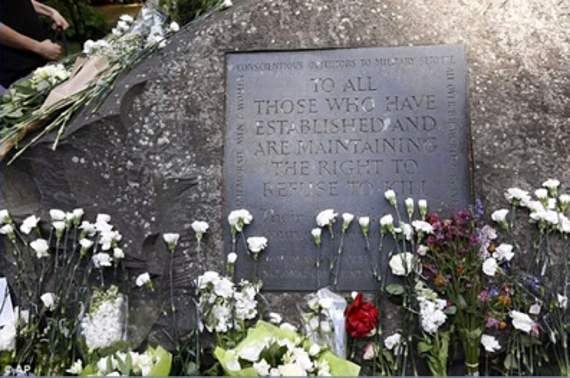
The Second World War provided a very different moral dilemma and many of the issues of the conflict did allow these men of conscience to serve. There is now a memorial and remembrance for them too.
The talk was enlightening and illustrated with many personal anecdotes as well as photographs, illustrating both another feature of the significance of Dartmoor and a re-assessment of an historical perspective.
Our last talk will be in July (Todd Gray: "The Black Shirts in Devon”) before we take a break in August.
Recorded by Ann Marshall
Comments
This article has no comments yet. Be the first to leave a comment.